






Fusion Clan Is Showing Warwick a Different Side of Indian Cooking
There are restaurants that introduce new dishes to their customers, and then there are those with the ambition to introduce an entire culinary culture. Fusion Clan belongs firmly to the latter. From its home in historic Warwick, the restaurant is quietly challenging familiar perceptions of Indian dining by looking beyond the conventions of the traditional British curry house and towards the distinctive flavours, ingredients and traditions of Kerala.
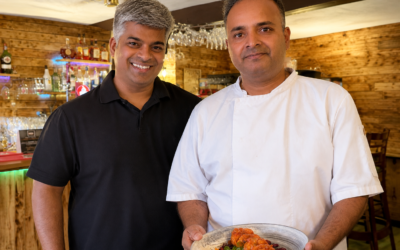
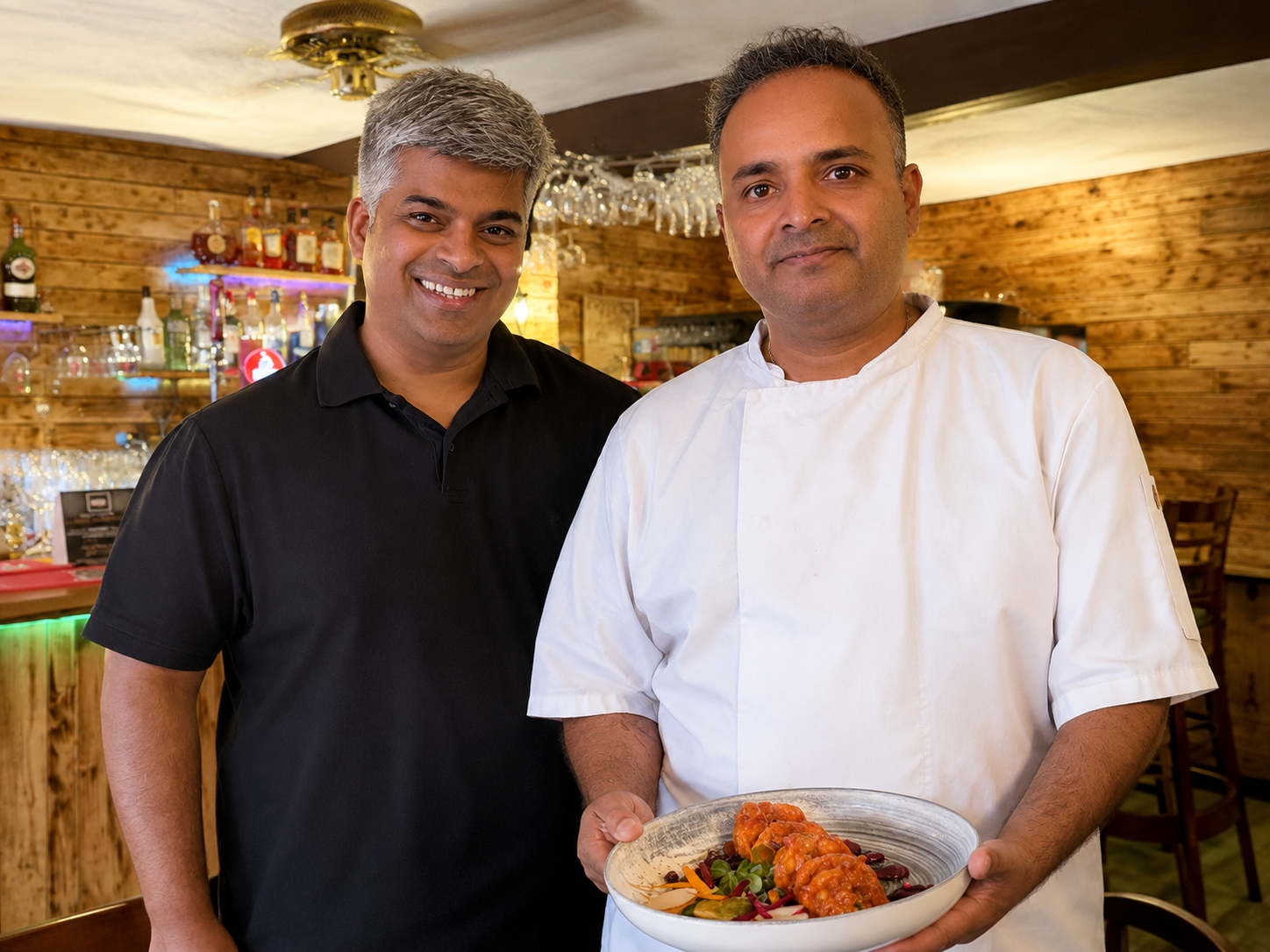
At the heart of that vision is Aby Joseph, founding partner of Fusion Clan, whose journey into hospitality began far away from the restaurant industry. With a professional background in medical sciences, Joseph brought a different perspective to the business when he joined forces with his long-time friend and chef Joshi. Their friendship, stretching back more than two decades, eventually developed into an idea they had discussed since around 2015: creating a restaurant capable of showing British diners another side of Indian cuisine.
What makes Joseph particularly engaging is the cultural conviction behind that ambition. For him, Kerala’s food cannot be separated from its geography and history. Its coastline, ancient spice routes, European influences and Syrian Christian heritage have all contributed to a cuisine shaped by centuries of cultural exchange. Fusion Clan takes inspiration from that history without allowing itself to become trapped by it.
That philosophy can be tasted across a menu that deliberately ventures into less familiar territory. Prawn Masala Fry, scallops, venison and the restaurant’s signature Malabar Lamb Shank Biriyani demonstrate a kitchen willing to explore while remaining rooted in regional tradition. The biriyani, in particular, encapsulates the restaurant’s approach: slow-cooked lamb shank paired with distinctive rice from Kerala rather than simply following the more familiar formula expected by British diners.
Joseph is equally persuasive when discussing spice. His philosophy is refreshingly straightforward: Indian food should not be measured by how hot it is. Spices should reveal the character of an ingredient, not conceal it. It is a principle that says much about Fusion Clan’s cooking.
Choosing Warwick was equally considered. Joseph and his partners studied Stratford-upon-Avon, Leamington Spa and Warwick before settling here, even speaking with local residents about the kind of Indian food they wanted to experience. The response suggested an appetite for something different — and Fusion Clan was created to answer it.
In this conversation with Taste Asia, Aby Joseph discusses the friendship behind Fusion Clan, Kerala’s extraordinary culinary heritage, the importance of regional ingredients, building a restaurant in Warwick and why his team remains determined to show diners that Indian cuisine extends far beyond the traditional curry-house experience.
Ultimately, Fusion Clan is not attempting to reinvent Kerala. It is giving Kerala a contemporary table in Warwick — and inviting diners to discover just how much more there is to Indian food.
Tell us a little about yourself and how you became involved with Fusion Clan.
My professional background is actually quite different from hospitality — I come from the medical sciences. I don’t involve myself too much in the kitchen because that expertise belongs to our chefs.
Myself and Joshi, who is a chef, have been close friends for more than 20 years. We have known each other for a very long time. When I first came to the UK, Joshi was already living here, and naturally we would go out to eat together.
Coming from Kerala in South India, I had grown up with a very particular understanding of Indian food and spices. When I visited restaurants here that described themselves as Indian, I sometimes found the food very different from what I knew at home. There is nothing wrong with that — every restaurant develops its own style — but it made us realise there was an opportunity to introduce people to another side of Indian cuisine.
That was really where the idea began.
Why is Kerala so important to the identity of Fusion Clan?
Kerala has an extraordinary relationship with spices. We are at the southern tip of India, historically connected to some of the world’s great maritime trading routes. Portuguese and other European traders travelled through the region, and spices from Kerala eventually reached kitchens around the world.
For us, spices are something very familiar. Many families traditionally grow spices at home, so they are part of everyday life rather than something exotic.
Kerala’s food has also been influenced by people arriving from different parts of the world over many centuries. There is, for example, a strong Syrian Christian heritage in Kerala. Different culinary traditions have met our local ingredients and spices, and that mixture has helped create a very distinctive cuisine.
That cultural exchange is something we try to represent at Fusion Clan.
When did you first begin planning Fusion Clan?
Joshi and I had been discussing the idea since around 2015. We wanted to do something like this for quite a long time. Another friend joined us in 2020, but obviously COVID interrupted everything and we couldn’t move forward with our plans.
Once the situation had settled, we were finally able to take the idea seriously and move towards opening the restaurant.
Why did you choose Warwick for Fusion Clan?
Firstly, I live in Warwick, so I already knew the area and its people. We originally considered three locations: Stratford-upon-Avon, Leamington Spa and Warwick.
Because I lived here, I was able to speak to local people and understand what they wanted from an Indian restaurant. Warwick already had a number of Indian restaurants, so the question for us was not whether people liked Indian food — they clearly did. We wanted to know whether they would be interested in something different.
We carried out a small survey among households in Warwick and asked people about the styles of Indian food they would like to see. We mentioned different possibilities, including South Indian cuisine, and a number of people specifically said they would like to try South Indian food.
That gave us confidence that there was an opportunity here.
Did Warwick offer advantages over Stratford-upon-Avon and Leamington Spa?
Yes. Stratford has an enormous number of visitors, but many are daytime visitors. Warwick has tourism too, but it also has a strong residential community. We felt that combination was important because we wanted to build relationships with regular customers as well as visitors.
There were practical reasons too. I live in Warwick and our chef lives around Stratford, so the location works well for us.
Finding suitable premises immediately after COVID was also difficult because there was considerable demand. When this property became available, we could see its potential.
Smith Street already had several established restaurants, so we felt it could increasingly become a food destination in its own right.
With several established restaurants nearby, how does Fusion Clan compete?
Aby Joseph: I don’t really think about it purely as competition because what we offer is quite different.
There are restaurants nearby that have been established for many years, and we have a good relationship with them. We are not trying to reproduce what they do.
The important thing to understand about Fusion Clan is that we are not a traditional curry house. That is something we have always tried to communicate.
When you look through our menu, you will find dishes and combinations that you may not commonly encounter in a conventional Indian restaurant.
What makes the Fusion Clan menu different?
Aby Joseph: We want people to come here expecting to discover something.
Our Lamb Shank Biriyani is a good example. Lamb shank is not something you commonly see presented in a biriyani, and even the rice we use is different from what many diners expect.
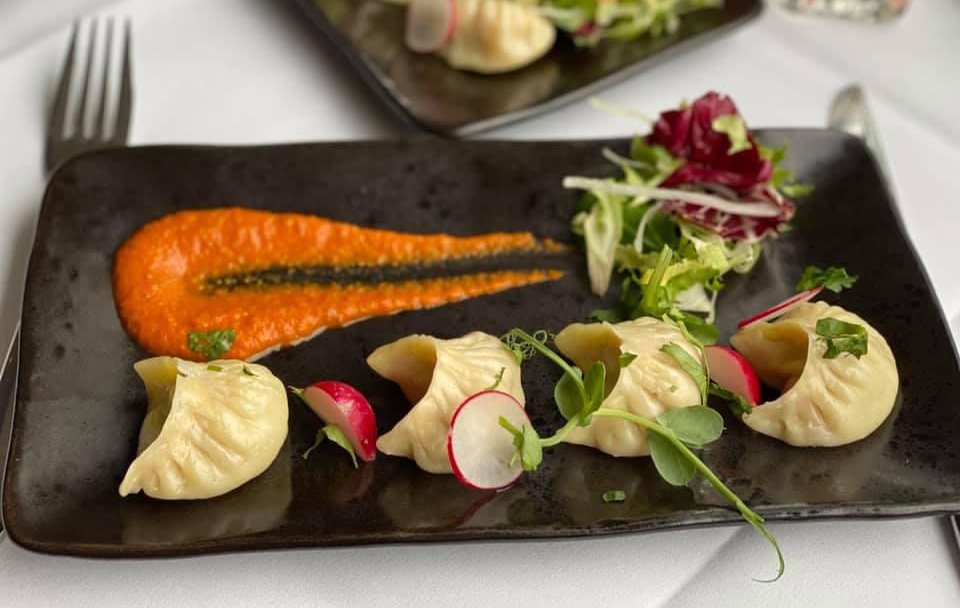
We also have dishes such as Prawn Masala Fry, which is one of the chef’s specialities, and other dishes incorporating ingredients such as venison, scallops, chicken liver and mushrooms.
Some of these may seem unusual in the context of a conventional British Indian restaurant, but they make sense when you understand Kerala’s culinary history and the influences that have reached the region over centuries.
Our aim is to take those ideas and present them in our own way.
You recommended the Prawn Masala Fry. What makes it special?
Aby Joseph: The Prawn Masala Fry is one of our chef’s specialities and reflects the seafood culture we grew up with in Kerala.
Kerala has a long coastline, so seafood naturally plays an important role in our cooking. The idea is not simply to cover seafood with a powerful sauce. It is about choosing the right spices and using them in the right proportions so that you can still appreciate the ingredient itself.
That principle is very important to our cooking generally.
Who are Fusion Clan’s customers?
Aby Joseph: We have developed a very good local customer base, including many regulars. That is extremely important to us because we wanted Fusion Clan to become part of the local community.
At the same time, customers travel to us from outside Warwick. We see people coming from Stratford and other places within roughly a ten-mile radius, as well as visitors who are travelling through the area.
People often discover us online, look at the menu and realise that what we are offering is a little different. That curiosity encourages them to visit.
How important are social media and online reviews to the restaurant?
Very important. Social media is one of our strongest ways of communicating with customers, and today it is almost impossible for a restaurant to ignore Google and search engines.
We work on making sure people can discover our website and understand what Fusion Clan offers before they arrive.
Reviews are also extremely valuable. When customers genuinely enjoy the food, we encourage them to share their experience. Word of mouth remains incredibly powerful, but today a lot of that word of mouth happens online.
Do you organise special events at Fusion Clan?
Yes. We organise special South Indian events during the year. One example is our vegetarian feast, where we serve around 24 vegetarian items.
We promote these events through social media and other channels because we want people to know they are coming for something special rather than simply another restaurant meal.
Events like these also allow us to introduce customers to aspects of South Indian food and culture that they might not otherwise experience.
What do you want people to understand about Indian food after dining at Fusion Clan?
I would like people to understand that Indian food is enormously diverse.
Indian cooking is not simply about putting different sauces together, nor should it always be associated with extreme heat. For us, it is about using spices correctly.
The right combination and proportion of spices should complement the main ingredient rather than overpower it. Not all Indian food is hot, and spice does not necessarily mean chilli.
We want people to experience the food we grew up with, understand where it comes from and perhaps discover a different side of Indian cuisine.
Yes. Based on the information supplied for the restaurant review, the correct term should be Wayanadan Kaima rice, so I would remove the uncertain “Jira Rashala/Jira Rashana” wording entirely.
Here is the corrected section:
Tell us about your signature Malabar Lamb Shank Biriyani.
Lamb Shank Biriyani is not something you commonly find in Indian restaurants, and ours is particularly distinctive because of the rice, spices and cooking method.
The lamb shank is slow-cooked for hours with a carefully selected blend of spices, allowing the meat to absorb those flavours gradually until it becomes exceptionally tender and falls away from the bone.
For the biriyani, we use Wayanadan Kaima rice, a heritage variety specially sourced from the Wayanad region of Kerala. Traditionally, Malabar biriyanis are made with Kaima rice rather than the long-grain basmati that many British diners might be more familiar with.
What makes Kaima rice particularly special is the way it absorbs flavour. It takes on the aromas of the spices, stock and ghee beautifully while retaining its own distinctive texture and fragrance. When combined with the slow-cooked lamb shank, everything comes together remarkably well.
You can find lamb biriyani, chicken biriyani and many other varieties in Indian restaurants, but our Malabar Lamb Shank Biriyani is something quite different. It represents where we come from, the ingredients we grew up with and the style of cooking we want people to discover at Fusion Clan.