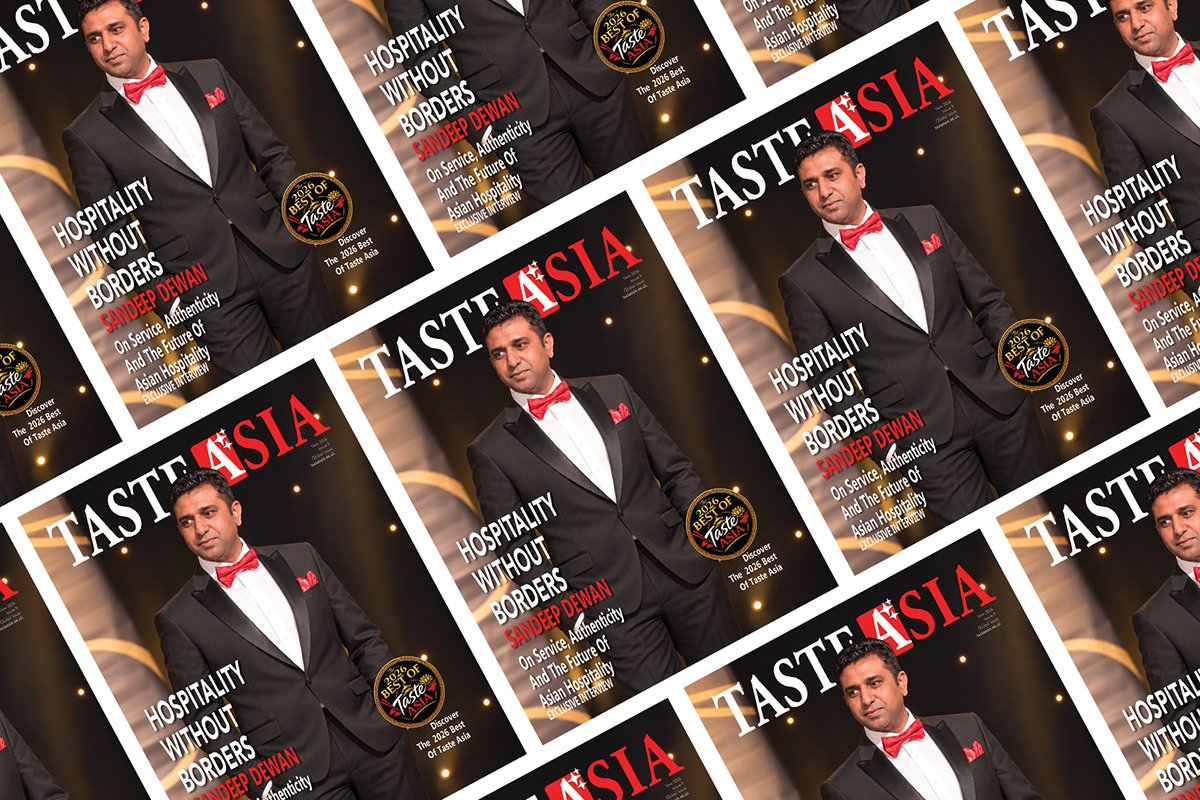







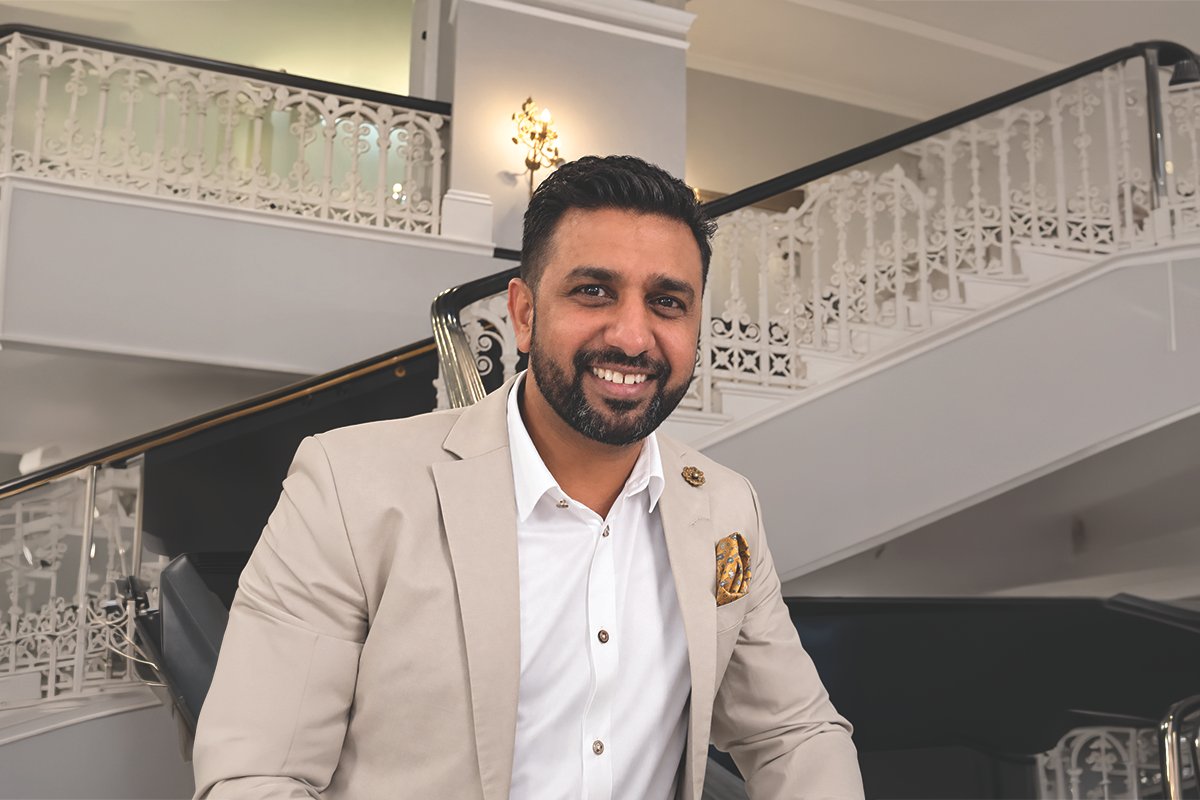
Sandeep K. Dewan brings decades of international hospitality experience to a career defined by leadership, exceptional service and cultural connection.
Global Experience, Timeless Hospitality
There are hospitality careers built in restaurants and hotels, and then there are careers that become passports to the world. Sandeep Dewan’s belongs firmly to the latter.
Over more than two decades, the London-based hospitality and beverage consultant, international judge and trade expert has moved with unusual ease between luxury service, entrepreneurship, product development, media, international trade and the judging of culinary talent. His professional journey has taken him across more than 30 countries and into some of hospitality’s most demanding environments.
Along the way, he has served monarchs, heads of state, celebrities and business leaders as a private butler — work requiring discretion, anticipation, precision and an instinctive understanding of people. Yet what stands out when speaking with Sandeep is not the stature of those he has served, but the lessons he took from those encounters: remain grounded, stay humble and treat everyone with respect.
That principle runs through his entire philosophy of hospitality.
For Sandeep, great service is never merely the polished choreography of a dining room. It is the accumulation of countless small decisions — listening carefully, responding intelligently, understanding a guest before a request is made and recognising that the most memorable hospitality often appears effortless. His enduring L.A.S.T. principle — Listen, Apologise, Solve and Thank — reflects the disciplined simplicity with which he approaches the profession.
His perspective is particularly compelling at a moment when the hospitality industry is undergoing profound change. Rising operating costs, staffing shortages, immigration pressures and increasingly value-conscious consumers are reshaping restaurants across Britain. Sandeep does not underestimate those challenges, but neither does he view them simply as obstacles. His argument is that hospitality must become more intelligent, adaptable and attentive without surrendering the qualities that made it special in the first place.
Nowhere is that philosophy more evident than in his view of Asian cuisine.
He sees Britain’s relationship with Asian food not as a passing culinary fashion but as part of a deeper cultural evolution. As travel, migration and international exchange have broadened British tastes, Asian cuisines have become increasingly woven into the country’s dining identity. For chefs, however, greater visibility brings greater responsibility. Innovation matters, Sandeep argues, but it should illuminate authenticity rather than erase it. “Innovation should enhance authenticity, not replace it” is perhaps one of the clearest expressions of his culinary outlook.
His years as an international judge have also given him an unusually broad view of what separates good cooking from genuine excellence. Technique matters, of course, but so do discipline, confidence, presentation, storytelling, organisation and an understanding of why a dish exists in the first place. In his eyes, a memorable plate should reveal something about the chef behind it — their experience, imagination and personality.
Perhaps most importantly, Sandeep keeps returning to people.
He is deeply conscious that the future of Asian hospitality cannot depend on celebrated chefs alone. Front-of-house professionals, young cooks, emerging entrepreneurs and the next generation entering the industry all have a role to play. Without training, mentorship and pride in the profession, culinary heritage cannot simply be assumed to survive.
That concern gives this conversation a significance beyond one man’s career. Sandeep Dewan’s story is ultimately about what hospitality can become when experience is matched by curiosity, ambition by humility, and commercial understanding by a genuine belief in service.
From a college bench in New Delhi to international hospitality, television, entrepreneurship, judging and global trade, his journey has crossed industries, borders and cultures. Yet his central belief remains remarkably uncomplicated: hospitality is about people.
In an industry continually chasing the next trend, that may be the most enduring lesson of all.
Taste Asia is delighted to welcome Sandeep Dewan to its pages.
Sandeep K. Dewan brings rare global perspective, disciplined leadership and genuine warmth to hospitality, championing people, heritage, service and innovation.
Highlights
- A hospitality career spanning Europe, the Middle East and Asia.
- Began his professional journey at Hotel Imperial in New Delhi.
- Trained at IHM Pusa, where discipline, punctuality and service became foundations of his career.
- Worked as a private butler serving celebrities, monarchs, business leaders and heads of state.
- Arrived in the UK in 2009 and went on to establish his own business.
- Twice nominated for Entrepreneur of the Year at the Slough Business Awards.
- Has worked across hospitality, beverages, international trade, judging and entrepreneurship.
- Believes front-of-house excellence is every bit as important as great cooking.
- Sees Asian cuisine as a powerful bridge between cultures.
- Argues that innovation should strengthen authenticity rather than replace it.
- Believes restaurants must invest in people as seriously as they invest in premises and products.
- Has visited more than 50 distilleries, breweries and wineries.
- Identifies zero-alcohol, vegan, gluten-free and sustainability-led products as areas of opportunity.
- Encourages Asian brands to protect their identity, heritage and provenance when entering Britain.
- Believes future restaurants must combine food with service, drinks, design, technology, convenience and overall experience.
You have worked across more than 30 countries and experienced hospitality from luxury service to international trade. How did your journey in hospitality first begin, and what shaped your career most strongly?
My journey began with a dream on a college bench to build an international career.
From my first role at Hotel Imperial, Janpath, New Delhi, I developed my expertise as a Drink’s specialist. A front-page interview in Singapore’s The Straits Times gave me the confidence and motivation to pursue my international ambitions.
I progressed to working as a Private Butler for Celebrities, Monarchs, Tycoons, Luminaries, Business leaders, and Heads of State, receiving numerous awards and letters of appreciation.
One phrase changed the direction of my life: “Working for Tycoons and Working with Tycoons and Luminaries.” It opened doors to extraordinary experiences, relationships, and opportunities.
After travelling across Europe, the Middle East, and Asia, I arrived in the UK in 2009, founded my own start-up and nominated twice for Entrepreneur of the Year 2016 & 2017 at the Slough Business Awards, and later launched TV shows broadcast across Europe.
I have also had the honour of representing the UK at the United Nations, European Union, and internationally.
What began as a dream on a college bench became an international journey and the journey continues.
You trained at IHM Pusa in New Delhi. What lessons from those early years have stayed with you throughout your international career?
Being Indian, born and raised in a family deeply rooted in values, ethics, morals, and hospitality. Hence,hospitality has always been in my blood.
At college, we learned that the hospitality industry demands discipline, almost like the army’s focus, punctuality, hard work, honesty, and excellent time management.
One simple principle has stayed with me throughout my career and life: L.A.S.T. Listen, Apologise, Solve, and Thank.
The hospitality industry did more than build my career; it groomed me as a person, shaped my character, and influenced every aspect of my life.
For me, hospitality is about helping others, solving problems with a smile, staying positive, and always moving forward. I believe that with the right attitude, dedication, and willingness to learn, the sky is the limit.
You have served celebrities, monarchs, business leaders and heads of state as a private butler. What did that experience teach you about the true meaning of exceptional hospitality?
I have been truly blessed to work with and serve distinguished personalities, including Sir Sean Connery, Angelina Jolie, the Prime Minister of Singapore, the Prime Minister of Germany, the Prince of Kuwait, the Prince of Liechtenstein, the President of Gabon, and many other prominent figures.
These experiences were exceptional. I coordinated closely with their crews, chefs, butlers, managers, security teams, and government representatives, while managing sensitive coordination between international dignitaries and the Indian government.
The greatest lesson I learned from these remarkable people was simple: stay grounded, remain humble, and treat everyone with respect. Inspired by this lesson, I started my own charity in India to support, mentor, and advise young people, helping them build confidence and pursue their aspirations.
I also had the privilege of being part of and coordinating the launches of the Gabon Embassy, Banca Popolare di Vicenza, Deutsche Bank, and Chanel in India. Each international event strengthened my understanding of protocol, diplomacy, leadership, coordination, and flawless execution.
Having worked internationally and now being based in London, how would you describe the UK hospitality industry today? What does Britain do particularly well, and where could it improve?
With my international experience in the hospitality industry, arriving in London was a dream come true. London is a global destination where ambitious businesses aspire to establish their presence.
I always thank God, my parents, and my loved ones for their blessings, support, and best wishes that brought me to where I am today.
The UK hospitality industry, particularly its high-end hotels and hospitality groups, continues to offer tremendous opportunities. However, I believe there is still significant scope for delivering more “extra-mile hospitality.”
The shortage of genuinely hospitality-trained staff, rising employment costs, and immigration challenges have made it increasingly difficult to build and retain experienced teams.
For me, these challenges are also opportunities to bring my international experience, hospitality standards, and culture of genuine serviceto the UK and help take hospitality to the next level.
The UK hospitality sector has faced rising costs, staffing pressures and changing customer expectations. What do you believe are the biggest challenges facing restaurants right now?
The hospitality and tourism industry has undergone a dramatic transformation since COVID-19, which hit the sector particularly hard. The rising cost of living has further changed consumer behaviour, with people becoming increasingly conscious of value for money.
Hospitality and tourism are often among the first industries affected when people reduce their spending. Even as a hospitality professional, I understand this from a customer’s perspective—I also look for genuine value.
As a result, many consumers now prefer supermarkets, takeaways, affordable restaurants, and budget hotelsover premium services.
At the same time, hiring and retaining experienced hospitality professionals has become increasingly expensive, while recruiting skilled talent from overseas can be challenging because of immigration requirements and associated costs.
The industry therefore faces a delicate balance: customers want genuine value, while businesses must manage rising costs and a shortage of skilled people. The future will depend on finding smarter ways to deliver quality, service, and value together.
Asian food has become an important part of Britain’s dining culture. How have you seen the UK’s understanding and appreciation of Asian cuisine change over the past two decades?
Britain has always shared a strong relationship with Asia, particularly India. Over the years, increased travel for business, education, tourism, and social connections has brought people closer to different cultures, cuisines, and dining experiences.
We must recognise the significant changes that have taken place globally over the past decade. The movement of people across countries, together with the growing availability of Asian food in restaurants and supermarkets, has transformed Britain’s food and hospitality landscape.
Today, people are more familiar with Asian flavours, ingredients, and dining traditions than ever before. Asian cuisine is diverse, authentic, and incredibly rich in flavour, and its growing popularity presents a tremendous opportunity for the UK hospitality industry.
I believe this is not simply a trend—it is a long-term opportunity to bring cultures together through food.
Do you think Asian restaurants in Britain are now being judged on the same terms as European fine-dining restaurants, or are there still stereotypes that the industry needs to overcome?
Absolutely, there is no doubt that Asian restaurants are now competing at the same level as European fine dining. As a Chair Judge for various awards and organisations, including BCA and ACF, I have witnessed a new generation of young, talented entrepreneurs from around the world entering the UK market. Many Michelin-starred chefs are also leading successful restaurant groups.
Even in Mayfair, London, we can find numerous Indian fine-dining restaurants associated with renowned and celebrity chefs.
When it comes to balancing authenticity, innovation, and local tastes, I believe chefs are artists. Like every other industry, hospitality must continue to evolve. The real skill is respecting authentic traditions and ingredients while using modern techniques, creativity, and presentation to create something exciting.
For me, innovation should enhance authenticity, not replace it. When chefs truly understand the ingredients, flavours, traditions, and techniques behind a cuisine, they can give them a modern expression without losing their soul.
I firmly believe that we can achieve the same level of authenticity, quality, and taste in the UK as in the countries where these cuisines originate. Food has no borders, and great cuisine can travel while still preserving its identity.
As an international competition judge, what qualities make a chef stand out to you beyond technical cooking ability?
As a judge, the first thing I consider is how the food is delivered and served. For me, those two simple actions represent far more than presentation alone. They reflect timing, organisation, precision, technique, attention to detail, and respect for the guest.
I assess the complete journey of the dish—from the kitchen to the plate and, ultimately, to the person experiencing it. I look at the presentation, texture, recipe, garnish, flavour, technique, innovation, ingredients, accompaniments, and service. Every element should have purpose, balance, and intention.
But judging goes beyond what is placed in front of me. I also observe the chef. I look for confidence, knowledge, creativity, discipline, composure, and an understanding of their craft. Most importantly, I want to hear the story behind the dish—the inspiration, the ingredients, the techniques, and the decisions that brought it to life.
For me, great food is not simply food that tastes good. Great food communicates something. It reflects the chef’s identity, experience, imagination, and passion. It shows in the smallest details: the precision of a garnish, the balance of flavours, the quality of an ingredient, the control of a technique, and the way the dish is ultimately presented to the guest.
As a judge, my role is therefore not just to taste. It is to understand, observe, question, and recognise excellence.
Because behind every exceptional dish is a chef who has demonstrated skill, passion, creativity, discipline, and personality.
And when all of those elements come together, the result is more than a dish—it becomes an experience.
What mistakes do you most frequently see talented chefs or restaurant owners make when trying to turn culinary talent into a successful hospitality business?
Everyone in our industry is striving to be the best. But I am concerned that Asian culinary and hospitality talent is slowly shrinking. We must honour the generations who have protected and promoted our cuisine, while recognising that fewer young people are choosing hospitality as a career.
We must remember that front of house is as important as the kitchen. Great food needs great hospitality. Service professionals are the face of the restaurant—the people who create the experience, build relationships, represent the brand, and drive revenue.
Chefs must also keep learning, evolving, and embracing new techniques while protecting the authenticity, heritage, and identity of their cuisine.
If we want Asian hospitality to have a strong future, we must invest in people, not just premises and products. We need to train, develop, inspire, and retain the next generation.
Our food heritage will survive only if we give the next generation the skills, pride, and opportunity to carry it forward.
You have helped introduce products into the UK market and have considerable experience in beverages and international trade. What should Asian food and beverage brands understand before trying to enter the British market?
Asian food and beverage brands have significant potential in the UK, but success requires more than a good product. It requires market insight, strong positioning, the right partnerships, and long-term strategic thinking.
Through judging across Europe, introducing products to the UK, and visiting more than 50 distilleries, breweries, and wineries, I have seen significant opportunities in emerging areas such as zero alcohol, vegan, gluten-free, sustainability, and innovative packaging and marketing on the right platforms
My advice to Asian brands is simple: understand the market, identify the gap, get the product right, build the right team, and choose the right route to market. The UK is diverse and competitive, so understanding different consumers and price points is essential.
Most importantly, do not compromise your Asian identity. Authenticity, heritage, and provenance are valuable competitive advantages. The objective is not to change who you are, but to communicate your value in a way the British consumer understands and appreciates.
With the right product, leadership, partnerships, and execution, Asian brands can move beyond market entry and build trusted, sustainable brands in the UK.
Looking ahead five to ten years, what trends do you believe will shape Asian restaurants and Asian chefs in Britain, and who do you think will succeed in this changing landscape?
Market research and location will be critical to future success. Pan-Asian, Japanese, Chinese, and Southeast Asian cuisines have strong growth potential alongside established Indian cuisine.
However, restaurant operators face increasing challenges—from rising living costs and energy prices to geopolitical uncertainty, government policies, and tighter immigration rules affecting access to skilled workers. These factors must be built into long-term business planning.
Consumer behaviour is also changing. Younger generations are increasingly influenced by drinks, social media, reviews, music, design, parking, convenience, and the overall experience, not simply the food. A strong drinks and wine programme can therefore be a major differentiator.
Restaurants must also stay ahead in menu innovation, vegan and vegetarian options, service, delivery, and value. Delivery and service-led models will continue to create opportunities alongside traditional dining.
Ultimately, the winners will be those who understand the market, anticipate change, embrace technology and trends, and adapt quickly without losing their identity.
In a rapidly changing market, flexibility is no longer an advantage—it is a necessity.
Bonus Questions:
If you could invite any three people in the world to dinner, who would they be and why?
My dream is to bring together three individuals who each command immense influence across very different spheres of world affairs: Hon. Prime Minister Narendra Modi, Swami Avdheshanand Giri Ji, and Mr. Donald Trump.
No single person holds all the answers to the challenges facing our world. However, by uniting these contrasting viewpoints around one table, we can spark a meaningful discussion on how to build a world that is more peaceful, compassionate, and prosperous.
A Shared Core Vision
At the heart of this initiative is a simple, fundamental conviction: every human being deserves access to food, shelter, safety, dignity, and good health, along with the opportunity to live a happy, fulfilling life. Achieving this requires synthesised action across governance, spirituality, and enterprise.
Key Perspectives at the Table
- Governance & Strategy — Hon. Prime Minister Narendra Modi
Brings invaluable insight into large-scale governance, international diplomacy, long-term strategic planning, sustainable development, and environmental stewardship.
- Spiritual Wisdom & Human Values — Swami Avdheshanand Giri Ji
Offers a grounding spiritual lens—focusing on inner peace, empathy, positive action, universal human values, and the moral foundation required for a harmonious society.
- Economic Dynamism & Enterprise — Mr. Donald Trump
Provides a strong focus on economic expansion, practical leadership, job creation, trade priorities, and building tangible opportunities for future generations.
What can we do — individually, nationally and collectively — to make life better for humanity and for future generations?
I would like the conversation to focus on peace and cooperation among nations, food and shelter for people living in hardship, better health and quality of life, protection of nature, education and employment for young people, compassion and responsible leadership, and long-term thinking about the future of our planet. Every day, I pray for the well-being of humanity. I believe that even a small personal initiative can start a meaningful conversation. Meanwhile, I have a charity organisation which helps students to choose the desired career pathway. One dinner may not change the world, but a genuine conversation can create ideas, understanding and inspiration. If people with different experiences and perspectives are willing to sit together, listen to one another and work toward common human goals, it may become the beginning of something much bigger. My hope is for a world where future generations can live with peace, dignity, opportunity, good health and hope. This is not about politics, religion or personal interests. It is about humanity — and what we can do together to leave a better world for the next generation.
What is the one Asian dish you could happily eat every week without getting bored?
Home cooked Parathas,
After visiting so many countries, which destination surprised you most for its food and hospitality? Tuscany, Italy, having my favourite Super Tuscan wines with authentic Italian food in the vineyards.
If you were not working in hospitality, what career do you think you would have chosen instead? Speaker, Educator & Leader
For Sandeep K. Dewan, Great Hospitality Begins With Understanding People
In an exclusive interview, Sandeep K. Dewan reflects on global service, entrepreneurship and culinary judging while championing humility, authentic Asian cuisine, mentorship and a more human future for modern hospitality.
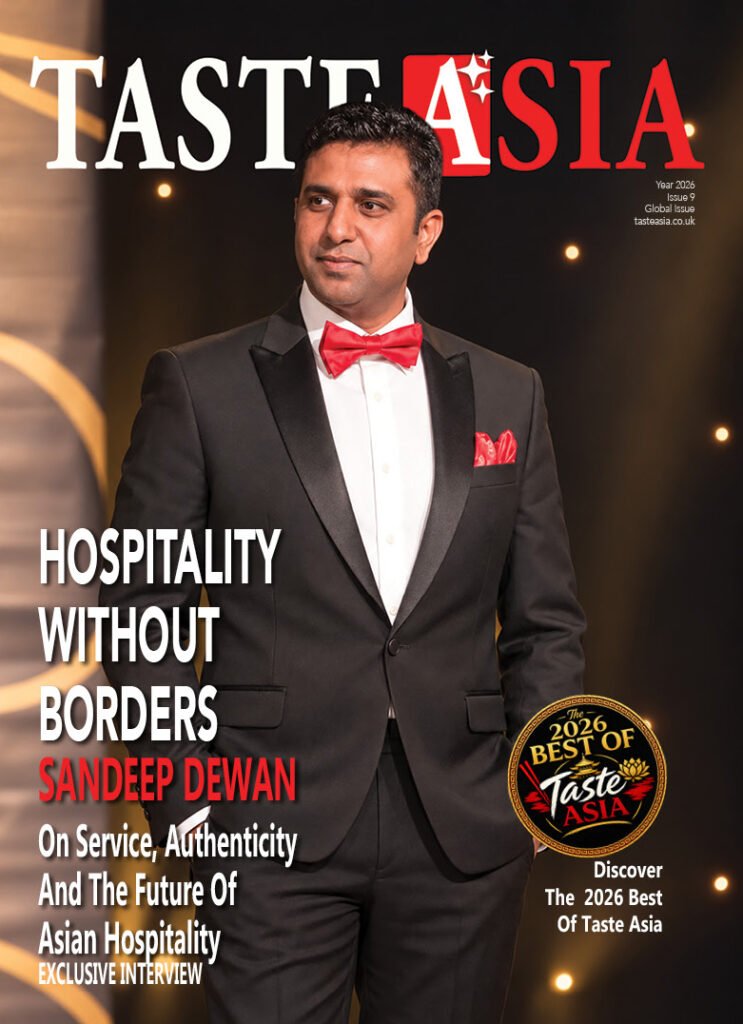
Magazine details
- Publisher : Newyox Press
- Publication date : September 24, 2026
- Edition : 7th Issue ed.
- Language : English
- Print length : 66 pages
- ISBN-10 : 1642264717
- ISBN-13 : 978-1642264715
- Item Weight : 7.9 ounces
- Dimensions : 8.25 x 0.18 x 11 inches
- Pages: 68
LOOK INSIDE: Click cover image to see inside