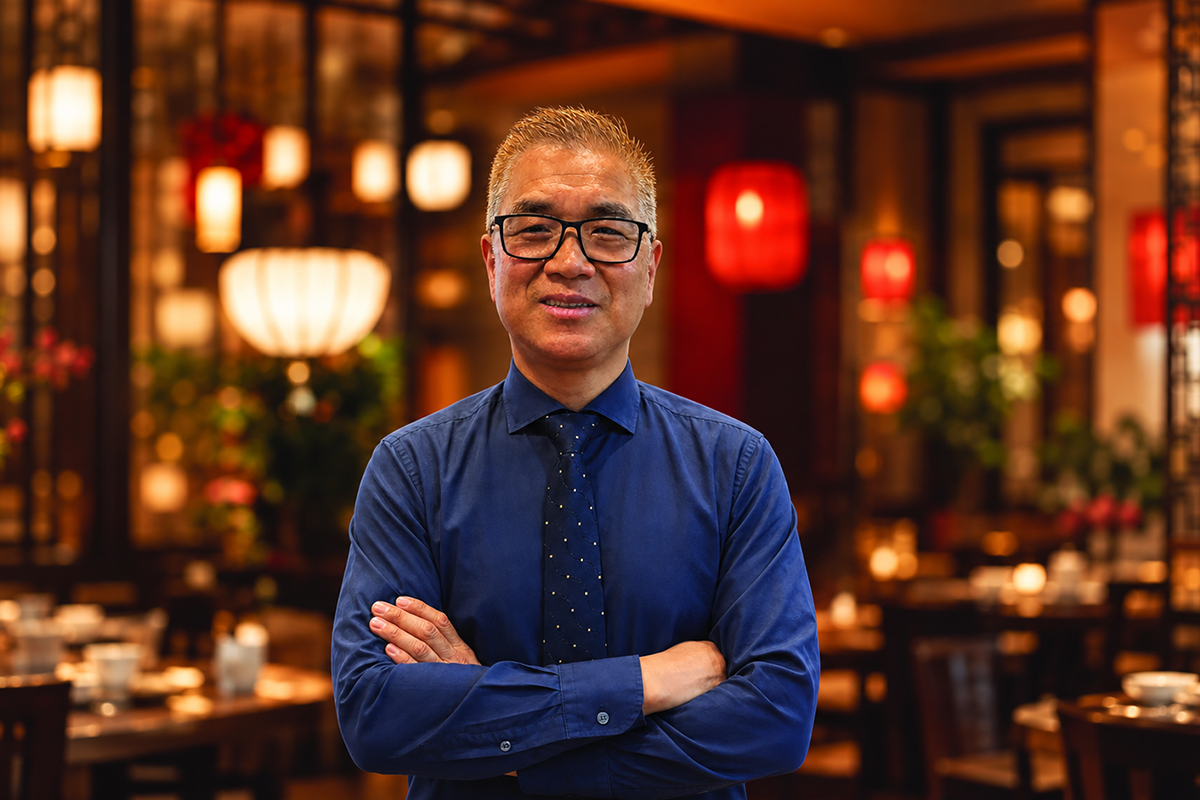








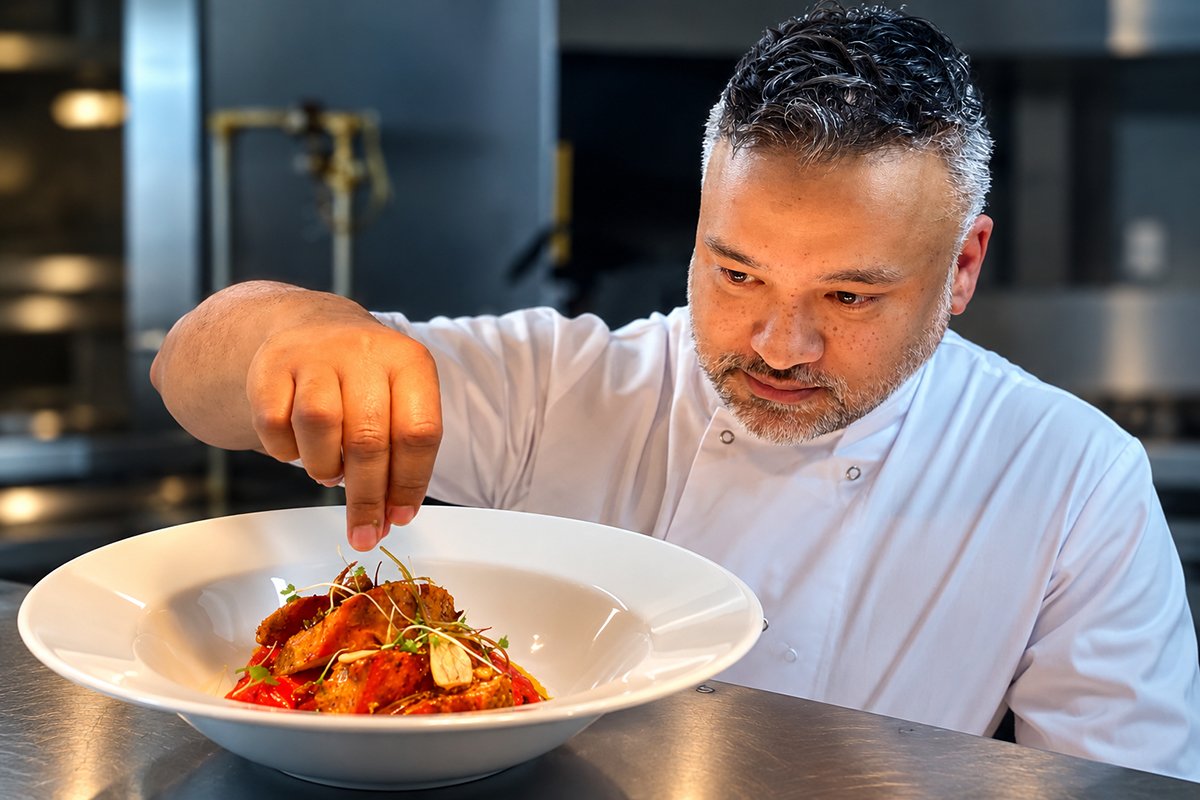
Photo: Shah F. Athar, the driving force behind the UK Curry Championships, has become an influential advocate for professional standards, chef development and British Asian hospitality.
The Man Raising the Bar for Britain’s Curry Chefs
Shah F. Athar discusses the UK Curry Championships, professional standards, chef development, industry challenges and his ambition to ensure British curry continues evolving through integrity, education and genuine culinary excellence.
T here are people who work within an industry, and there are those who devote themselves to moving that industry forward. Shah F. Athar belongs firmly in the latter category.
Across British Asian hospitality, Athar has built a reputation not simply as a respected culinary professional, competition organiser and trainer, but as an advocate for higher standards, greater professionalism and meaningful opportunities for the next generation. His work stretches from the competition kitchen to classrooms, industry forums and Parliament, reflecting a belief that hospitality deserves to be treated not merely as a job, but as a serious and rewarding profession.
That philosophy sits at the heart of the UK Curry Championships. Rather than creating another awards ceremony where recognition is easily distributed, Athar has championed live competition, transparent judging and genuine critique. Chefs are assessed on flavour, technique, organisation, hygiene, presentation, creativity and their ability to perform under pressure. The purpose is not simply to crown a champion, but to encourage every competitor to leave the kitchen better than when they entered.
His influence, however, extends far beyond competition. Athar has spent years supporting training and skills development, campaigning on behalf of the Asian hospitality sector and helping create pathways for chefs and restaurateurs to develop professionally. His commitment to nurturing talent is equally evident in his voluntary work teaching thousands of schoolchildren about Indian spices, cooking and culture.
Shah F. Athar combines integrity, leadership and determination to elevate British Asian hospitality while creating meaningful opportunities for future culinary talent.
Internationally, he has managed teams competing at the Culinary World Cup, created the Asian Plate Art Awards during the pandemic and earned recognition for his contribution to culinary judging and hospitality.
For Taste Asia, what makes Shah F. Athar particularly compelling is that his work is ultimately about people: giving chefs confidence, demanding excellence without compromising fairness, protecting the integrity of competition and reminding the industry of its enormous cultural and economic value.
In this interview, Athar speaks candidly about the UK Curry Championships, the future of British curry, the pressures facing Asian hospitality and why the next generation of chefs must see themselves not simply as cooks, but as professionals capable of shaping the future of an extraordinary industry.
Highlights
- Merit Over Easy Recognition — Athar created the UK Curry Championships to reward genuine culinary ability rather than simply handing trophies to participants.
- Taste Comes First — However impressive a dish may look, he believes flavour must remain the overriding factor in judging.
- Cooking Under Pressure — Live competition allows judges to assess technique, discipline, hygiene, organisation, confidence and creativity alongside the finished dish.
- One Champion — Athar is uncompromising about competition standards, insisting that genuine credibility comes from selecting one deserving winner.
- Learning Through Competition — Winning matters, but Athar wants every participating chef to leave with greater knowledge, confidence and ambition.
- Tradition Meets Innovation — Modern techniques are welcome, but they must never overshadow flavour or the integrity of the food.
- Building Careers — Former competitors have progressed into restaurant ownership, Michelin-starred groups and television appearances.
- Protecting Hospitality — Athar argues that rising costs, VAT, staff shortages and profitability continue to place enormous pressure on Britain’s hospitality sector.
- Technology And Hospitality — He is exploring how artificial intelligence could help restaurants understand customer trends, reduce waste and improve profitability.
- The Next Generation — Athar wants young chefs to view hospitality as a long-term career with genuine opportunities for professional development.
What inspired you to establish the UK Curry Championships, and what did you feel was missing from existing curry awards and competitions in Britain?
I was running various chef competitions before establishing the UK Curry Championships just to shine a spotlight on the curry industry and try and raise the standard as a whole.
What was missing from existing competitions was honest critique. What was the point of having a competition where everyone was given a trophy and named a winner. I wanted to establish a competition that would judge each chef on genuine merit. Yes, I did ruffle a few feathers and some chefs were upset they did not an automatic win just for entering, but that is what I set out to achieve. The downside is they don’t want to enter again and go on to look for much easier recognition.
You describe the UK Curry Championships as a competition to find the country’s best curry chef. What, in your view, separates a truly exceptional curry chef from a good one?
There are a lot of genuinely good curry chefs across the country that may cook to a certain formula. The exceptional ones are the ones that think outside their box and take immense pride in their profession that shows from the quality of produce they select to the presentation on the plate and the taste on the palate. They are not afraid of taking criticism and using it to improve themselves.
Great chefs will also know that there is always something new to learn.
The championship is built around live cooking rather than simply judging a restaurant or a finished dish. Why was live competition so important to you?
Live competition is always important because you can judge and compare a group of chefs under a strict set of conditions that include time pressure, hygiene standards, select menu, technique, confidence and then deliver the final product to a high standard.
A lot of people only see the finished product when presented in front of them. Most of them will not see the time and effort it takes to prepare each dish. That’s where live competition comes in. That’s where chefs can cook with freedom and showcase their passion and creativity.
What exactly are the judges looking for when assessing competitors — flavour, technique, presentation, originality, authenticity, kitchen discipline or something else?
Judges like to see good technique, provenance of ingredients along with how chefs handle themselves in the kitchen. Whilst cooking the judges will be very observant with all of these things. Taste will always be paramount in any judging process, but how and what is presented is also very important. Are the portions too big or small? Have they met the brief? Are there elements on the plate do not need to be there (e.g. salad leaves, fruit & veg carved florets as garnish). Does the choice of crockery suit the dish? Are plates hot or cold? Is the dish creative or innovative? Is the chef’s cooking station clean or messy? Is the chef practising good hygiene? Is the chef cooking within the specified time parameters?
The competition is run in collaboration with the Craft Guild of Chefs. How has that relationship helped raise the professional standards and credibility of the UK Curry Championships?
Working with the Craft Guild of Chefs to make this competition one of the standout events of the British Culinary Championships makes this extra special. The British Culinary Championships are one of the UK’s largest live culinary showcases that take place over two days. The second day entirely dedicated to the UK Curry Championships. Furthermore, we also have judging panel that include international multi award-winning chefs and industry professionals who are all experienced in judging high level cooking competitions. There is no other curry cooking competition that has this kind of pedigree. Stephen Scuffell, Vice President of the Craft Guild of Chefs has already endorsed the UK Curry Championships as a ‘World Class Competition’ – something which I take immense pride in.
Being backed by the Craft Guild and judged by an expert panel gives the competition credibility that no other competition has. The judging is transparent and completely fair without any prejudice. I have no input in to the judging process which keeps me impartial and no idea who the winner is until the results are announced.
One thing the competition does not do is cater for any egos. Something that is very important in establishing credibility. Every chef is judged on what and how they cook on the day. They are judged against their peers. The judges are tough and will look for greatness. This is not a competition where multiple trophies are handed out and everyone is a winner. No – there can only be one winner and only one champion!
The tougher the competition, the greater the triumph!
I want this competition to not only be fun and crown a worthy winner, but for all competitors I want this competition to be a learning experience. Chefs can learn from others and they can also learn a lot more about themselves. This will help them come back and raise their own standards.
British curry has evolved enormously, from traditional curry houses to contemporary Indian and Asian fine dining. How is that evolution reflected in the dishes you now see at the championships?
Having been in the Asian hospitality industry a long time and also running chef competitions since 2018, I’ve seen how not only dishes but chefs have evolved. The dishes we now see in the curry championships also reflect this evolution – especially in technique and presentation. Although, it’s great to see a bit of presentation magic with dry ice and infused smoke, the judges will be keen to see and taste what’s on the plate.
How do you balance tradition and innovation when judging curry? Can a highly modern interpretation compete successfully against a beautifully executed traditional dish?
Now, therein lies the skill! Just because a dish is beautifully presented on the plate doesn’t mean it tastes as good as it looks and likewise a traditionally presented saucy curry in a bowl can also tantalise the tastebuds. Obviously artistic presentation is important; taste will always be an overwhelming factor. I’ve seen some wonderful dishes that are presented with a modern French touch. Some of the traditional dishes thus far have been let down by their execution. I’d love these chefs to take this as a learning experience and come back more determined. I’d love to see a traditional home-style curry make the judges rave and take the honours
The title of National Curry Chef of the Year can potentially change a chef’s career. What opportunities have you seen emerge for chefs after competing in or winning the championship?
Earning the title ‘National Curry Chef of the Year’ and ‘UK Curry Champion’ will always look good on anyone’s CV. The significance will always be seen in the future when one looks back on the list of winners and competitors. In fact, we’ve seen the confidence and careers grow of many of our competitors. You do not need to win this competition to make it have an impact on your career or business. Some have opened their own restaurants, others have been headhunted by Michelin starred groups, some have been featured on mainstream TV, including BBC’s Masterchef and Great British Menu, some have even been given the opportunity to host their own live cooking show!
It’s this positive trajectory after competing in our competition that fills me with great pride and it’s a great stepping stone on their journey for personal development. This is one of the few competitions chefs can be proud to feature on their CV and shout about.
You have said the UK Curry Championships has grown considerably since its launch. What do you believe has driven that growth, and where would you like to take the competition next?
The UK Curry Championships have grown considerably since its inception, not only in size but its stature. Chefs are now seeing this as the most prestigious competition in the Asian hospitality sector. I believe the growth can be attributed by what the chefs have seen gone on before in previous competitions and how the event is run. I do my best to capture experience of the competition through photography and videography. This will give future entries an idea of what to expect. I’ve also had offers to organise competitions in other parts of the United Kingdom as well as develop competitions overseas. I am exploring all options but only if certain standards are met and integrity is maintained will I consider expanding the event.
Having worked extensively with Asian restaurants, chefs and hospitality businesses, what are the biggest challenges currently facing Britain’s curry and Asian restaurant sector?
There are a number of factors that are currently affecting the hospitality sector. The cost of amenities such as gas and electricity are extortionate. The cost of ingredients is also a hindrance as it’s difficult to pass on costs to the consumer. We also have the highest VAT rate than anywhere in Europe which hampers growth and profitability. There have been numerous campaigns to the government to try and reduce this burden but seems to fall on deaf ears. The industry is one of the biggest contributors the Treasury and not something that the government will ease up on lightly. Skilled staff shortages are also hampering growth as work visas for chefs are punitive to the potential employer.
Changes in customer trends will also affect the industry as it is more social media driven.
Profitability is likely the biggest factor to whether a business is viable or not. Most will look at increasing margins or reducing quality of ingredients. However, I’m currently working with a company, Knoesis, that looks to introduce AI technology that will help predict trends and customer eating habits and reduce wastage, which in real terms adds to productivity and profits. It’s an exciting area which hasn’t really been explored in our industry!
You are also involved in policy work and engagement with government and Parliament. What do you believe policymakers still misunderstand about the economic and cultural contribution of the UK’s Asian hospitality industry?
I also sit with government ministers and industry professionals on an All-Parliamentary Group (APPG) for Ethnic Minority Business Owners and discuss various issues affecting all sectors including hospitality. We have to keep emphasising the value of helping the hospitality sector. It is one of the UK’s largest employers and yet 95% of it is run by small business owners. This industry has its own ecosystem with employees, suppliers and ancillary businesses from legal to accountancy all attached. The impact of losing hospitality businesses in local communities can be huge.
Policymakers still think the hospitality industry is akin to the golden goose, but at some point, the golden goose will stop laying eggs if it’s not given any respite.
The cultural significance of the Asian hospitality sector is immeasurable.
The growth of the ‘Curry’ industry in particular can be attributed to the arrival of brave Bangladeshis with entrepreneurial spirit and their quest to better their family’s lives as well as their own. Since their arrival after the labour shortages of WWII, generations of Bangladeshis have taken the industry from its humble beginnings to now being closely entwined with British culture.
‘Going out for a curry’ was no longer a novelty but a rite of passage. The curry industry had established itself in British culture in almost every city, town and village across the UK where it can now proudly proclaim to be the nation’s favourite cuisine!
Looking ahead ten years, how do you think British curry will change — and what role would you like the UK Curry Championships to play in shaping the next generation of chefs.
The British curry industry will change. It has to. There will be a new generation of chefs and restaurateurs all experienced in social media marketing, but appreciative of the sector they represent.
The traditional curry will always be there as a staple and regular night out. The fine-dining aspect is not something most customers will experience every week. There will also be the casual dining establishments in-between.
I believe the most important factor for chefs and business owners will be professionalism in how a product is delivered. The UK Curry Championships will do its best to instil that in its next generation. I want chefs to see the huge potential this industry has to offer and how rewarding it can be if done properly. I don’t want chefs to see their role as a job but a career with aspirations. I have already seen the positive impact competing in the UK Curry Championships has had on chefs’ careers.
And I for one will always be more than happy to help them on their way!