


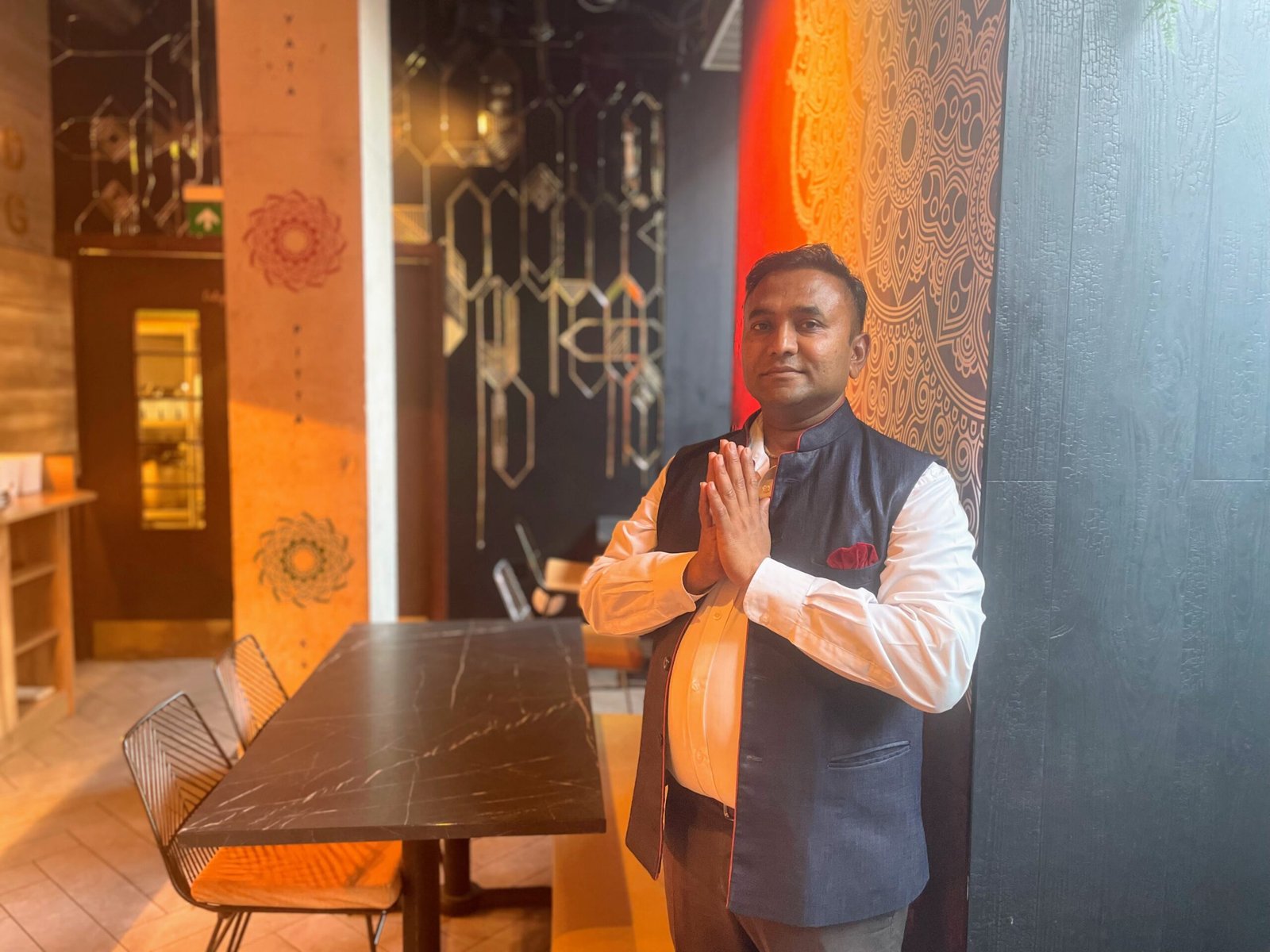
Vijay Jetani’s OMNOM redefines vegan dining by blending traditional Indian flavours with modern ingredients, fostering community through education and promoting sustainability—all while serving fresh, innovative dishes to a diverse clientele.
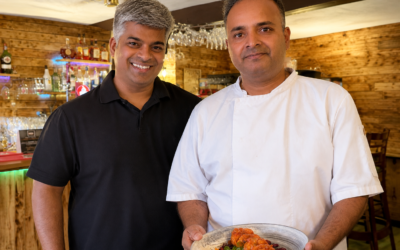
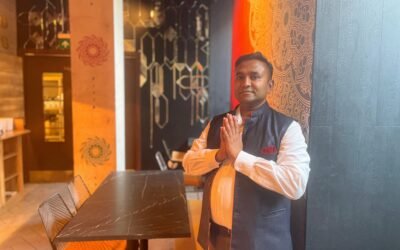
Vijay Jetani is the founder of OMNOM, an Islington Indian eatery focused on promoting vegan, eco-conscious eating. But OMNOM is about more than just food. Vijay is passionate about serving both the body and soul, and he utilises OMNOM’s event space for yoga classes and ‘enlightened eating’ vegan education and cooking classes.
While vegetarian diets are quite common in India, veganism is still a somewhat foreign concept, and its popularity in the UK sits quite low (under 5%) as well. But Vijay accepted the challenge of introducing a vegan restaurant concept even in the face of such low numbers, and it’s a concept that might turn even the most devout carnivores.
In this exclusive interview with Vijay Jetani, he shares about his inspiration, his struggles and proudest moments, and his hopes and dreams for his brand’s future.
What is OMNOM? Where does this concept come from?
Well, OMNOM has a very deep meaning. The concept comes from our complete body structure. So, we are made of soul and body structure, right? The body structure needs nourishment, and that’s what we do in our restaurant. But here in this wonderful [function room], we also nourish the soul. So, this is OMNOM. OMNOM is simply a combination of nourishment for the body, as well as nourishment for the soul. That’s why OMNOM is very, very unique, and there isn’t a place like it. Please come and visit!
What inspired you to open a fully vegan Indian restaurant?
I was born vegetarian, and I thought vegetarianism was enough living in India, until I came to the UK. Here, I was educated about the bad treatment of animals. That’s the reason I wanted to change my own view and practises. So, that led us into this concept. We had vegetarian restaurants before, but then we launched this new brand called OMNOM, which has a vegan restaurant but also a function room upstairs. It helps people to slowly and firmly change their consciousness. A lot of vegan education programs are run there. So, the reason, purely, is the way the animals are treated in the Western world—and even in India now. We don’t agree with it. That’s why we moved to vegan.
Veganism itself is already a quite sustainable and environmentally friendly practice. Is there anything else you do to achieve sustainability?
We always use eco-friendly packaging, and we are eco-friendly as much as we can be. In our staff training, we also educate our staff on how not to waste resources and to be conscious of their usage. Obviously, it helps with business costs as well, but we don’t want to create waste. For example, for the glass water bottles here, we have our own water dispenser; we don’t buy new bottles. Every time you buy a bottle, there’s 54g of CO2 impact. Reusing these glass bottles is only about 4g of CO2 impact. We have an environmental policy that each and every staff member must cooperate with as well.
Have you found that a lot of your customers are already vegan, or are you trying to encourage people to look at that point of view?
Encouragement comes from education. So, we educate people. We run our cookery school as well. Every Sunday there are people who come to learn about veganism, and we teach them how to cook it. So, it’s not a force, but it’s a gentle education. A lot of our customers are not necessarily vegan. That’s why we have plant-based meat, such as chicken, lamb, and seafood. This is how we help people to go on a smooth journey if and when they want to change their diets. Even if they’re not changing their diets completely, this gives them the option to choose vegan/vegetarian food when they’re dining out.
How do you balance tradition with putting your own modern spin on things?
We don’t mind going modern, because traditionally, in India, it’s either genuine vegetarian food or a meat diet. Now, we don’t do the meat diet. So, using plant-based ingredients to create a meat-like texture—this is what we call modernisation. But the sauces and the spices, they remain the same as tradition. It’s just the style has been changed a bit to make it more modern.
For someone visiting your restaurant for the first time, what are the best three dishes that you’d recommend that represent your restaurant most effectively?
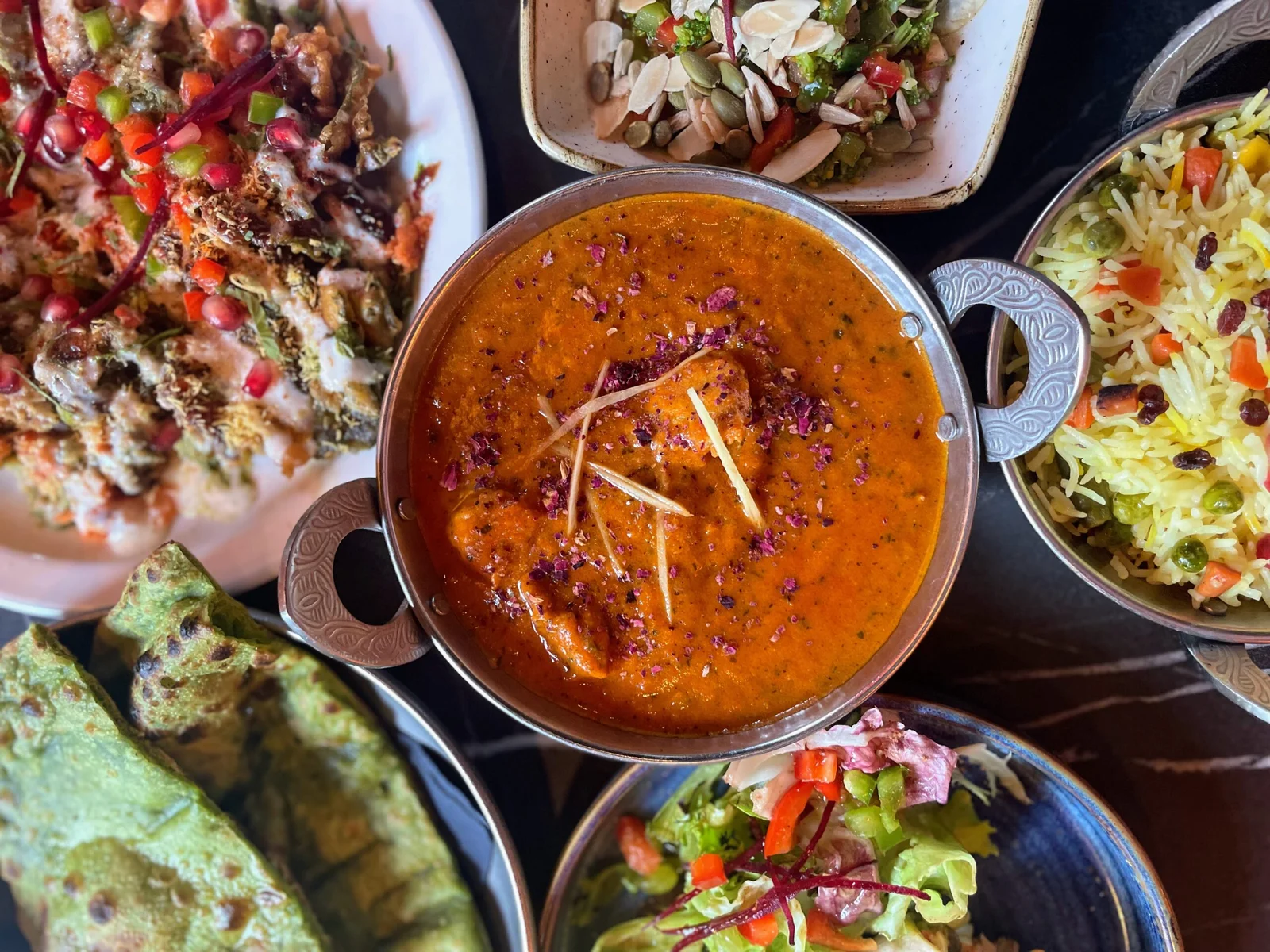
We have amazing Crispy Spinach Chaat. It’s made of crispy spinach with a really nice vegan yoghurt on the top. It’s very chill and refreshing in this sort of hot weather, so that’s our number one dish I would say. Another would be our vegan naan together with the plant-based chicken butter masala. We do an amazing, seeded tofu paneer broccoli salad as well.
How have your own personal background and your experiences influenced the menu and the atmosphere here?
We work alongside what is working in the market at the moment, but definitely my personal choices play a role. And the dishes served in our other restaurants have made a huge contribution to the menu which we are serving now. Anything we don’t like, it doesn’t go on the menu. First, we have to satisfy ourselves. So, the whole team sits down, tastes the food, and then once we are all happy with a particular dish, it goes on the menu. If a customer asks us, ‘What’s your best dish?’, we would say the whole menu—because we chose it. Otherwise, it wouldn’t be there. So when a customer asks us this, we always say, “Well tell me about you,” because for us, the whole menu is actually made up of our choices.
What has been your biggest challenge and your proudest moment so far?
In terms of Britain’s population, I think hardly 15% believe in veganism. So, I wish more people were open to try these options. That’s still a challenge. During COVID-19, it seemed veganism was on the rise. But since then, it’s now slowly going back down.
My proudest accomplishment is that we get to bring so many smiles to so many people through our cuisine, through our service, and through our education programme. I’m very happy that we are not just serving customers; we are also educating people. The other thing that I’m very proud of is that we serve 200 meals to people in need every Tuesday. Each week, 200 vegan meals are prepared and distributed at Charing Cross Station for people in need. And this has been happening for the past five years; we’ve done over 50,000 meals. With the profit we make, we like to give back to the community. And I’m very, very happy with that.
What do you hope guests feel or remember after dining here—not just about the food, but about the overall experience?
I want them to feel loved and cared for. This is the experience I want to give them. At the end of the day, especially those who are not vegan, if they try vegan food, they should feel satisfied. This is the ultimate aim.
Looking ahead, what’s next for the restaurant? Are there any new dishes, collaborations, or ambitions you’re particularly excited about?
I would like to do vegan express shops, and a cookbook is coming. A completely vegan cookbook will be launched around October.
By vegan express shops, do you mean a takeaway shop?
Yes, a takeaway shop, but with a little bit of seating as well.
Okay. And that would be a new location? Just more of an express location?
Yes, hopefully in a high foot traffic area. Our current location is chilled out—people come here to dine à la carte and hang out. The new concept would be vegan food ready to go.
A Note
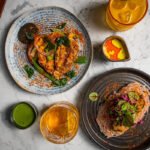
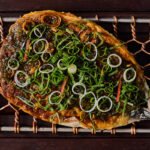
Following our fascinating interview, it is clear OMNOM is more than just an exceptional dining spot; it is a true sanctuary. Situated in Islington Square, this vibrant venue partners with Namaste Village to serve sensational, Ayurveda-inspired Indian cuisine. The crispy dosa waffles and smoky tandoori tikka are absolute triumphs of flavour.
Beyond the brilliant plates, OMNOM operates as a mindful community hub with an upstairs wellness studio. Crucially, their “one meal fed” charity initiative turns every superb dinner into vital nourishment for a child in need.