






After Visiting Nearly 70 Countries, One Truth About Food Still Endures
Chef Steven Heap reflects on four decades of culinary excellence, celebrating Indian cuisine, global traditions, education, authenticity and the enduring belief that confidence, simplicity and heritage create exceptional food.
F ew chefs embody the spirit of lifelong learning, culinary craftsmanship and cultural appreciation quite like Chef Steven Heap. Over more than three decades, he has built an exceptional career that extends far beyond the professional kitchen, earning admiration as a private chef, author, educator and passionate advocate for culinary heritage. His remarkable journey, which began in an Indian restaurant at the age of just fourteen, has evolved into a lifelong pursuit of excellence, taking him across almost seventy countries in search of authentic flavours, timeless traditions and the stories behind the world’s most treasured cuisines.
Chef Heap’s contribution to South Asian cuisine is particularly noteworthy. While deeply respectful of tradition, he has dedicated his career to making exceptional cooking accessible to everyone, whether through his bestselling books, sought-after cookery classes or bespoke dining experiences. His commitment to preserving the heritage of the iconic Birmingham Balti, alongside his continued exploration of regional Indian cuisine, reflects both his profound knowledge and his genuine respect for the cultures that have inspired his work. Equally impressive is his willingness to embrace new challenges, from representing his craft in prestigious culinary competitions to preparing meals for internationally renowned touring artists.
What distinguishes Steven Heap is not simply his technical expertise, but his philosophy that great food begins with understanding, curiosity and generosity. He believes that cooking should inspire confidence rather than intimidation, and that authentic flavour is achieved through mastery of technique, respect for ingredients and an appreciation of culinary tradition. His passion for sharing knowledge has encouraged countless home cooks and aspiring chefs to discover the joy of cooking with confidence and creativity.
In this exclusive interview, Chef Steven Heap reflects on the experiences that have shaped his extraordinary career, his enduring love for Indian cuisine, the importance of protecting culinary heritage, and his vision for the future of South Asian food in Britain. His insights offer not only a fascinating glimpse into the life of an accomplished chef, but also a compelling reminder that food has the power to connect cultures, preserve traditions and inspire generations to come.
“Chef Steven Heap is an inspiring culinary ambassador whose passion, knowledge and dedication continue to elevate British and South Asian gastronomy worldwide.“
You started working in Indian restaurants at just 14 years old. What first sparked your passion for food, and how did those early experiences shape the chef you are today?
Starting work in an Indian restaurant at the age of 14 was a defining experience for me and played a major role in shaping the chef I would become. It sparked my passion for food, but perhaps more importantly, it taught me that a successful food business is about far more than what appears on the plate.
At a young age, I began to understand the importance of teamwork, organisation, product selection, consistency, and the systems that operate behind the scenes. Delivering a dish that exceeds a guest’s expectations requires countless elements to come together successfully long before the cooking even begins.
Those early lessons have stayed with me throughout my career. They taught me that being a chef is not simply about creating great food; it’s about understanding the bigger picture of hospitality and recognising how every part of an operation contributes to the guest experience. While the industry continues to evolve and new challenges emerge, the fundamentals I learned at 14 remain as relevant today as they were then.
Having visited almost 70 countries, one of the most fascinating aspects of travel for me has always been seeking out traditional foods and the people who continue to make them in the same way their parents, grandparents, and even earlier generations did.
What I find particularly inspiring is the consistency and pride that many cultures maintain in their culinary heritage. In many parts of the world, food is deeply connected to tradition, and recipes and techniques are preserved rather than constantly reinvented. This contrasts with some Western food movements, where trends and styles can evolve rapidly. Neither approach is right or wrong, but I have always been drawn to cuisines that remain closely connected to their roots.
Watching people practise their craft day after day has had a profound influence on my cooking philosophy. Whether it’s someone making rotis at a roadside stall in Delhi, preparing falafel in Egypt, or producing a regional speciality that has remained largely unchanged for generations, there is something remarkable about the dedication to mastering a single craft through repetition and experience.
In many warmer countries, often, food preparation takes place in full view of the public, allowing you to sit with a coffee and simply observe. Some of my most valuable lessons have come not from professional kitchens, but from watching these everyday artisans work with confidence, efficiency, and an instinctive understanding of their craft.
These experiences have reinforced my belief that great cooking is not always about complexity or innovation. Often, it is about respecting tradition, understanding ingredients, and striving for consistency—qualities that continue to shape both my cooking style and my approach to food today.
You are known for your deep involvement in South Asian curry cuisine. What continues to inspire you about this culinary tradition after more than 30 years?
Indian food is where my culinary journey began, and after more than 35 years, it continues to inspire me as much as ever. One of the reasons is the sheer scale and diversity of India’s food culture. With its vast geography, enormous population, and influences that extend across South Asia and beyond, the variety of dishes, ingredients, and cooking traditions is almost endless.
I’ve always found it fascinating that the Indian restaurant menus we became familiar with in Britain represent only a tiny fraction of what India has to offer. Those Anglo-Indian favourites became popular for a reason, but they were selected from thousands of regional dishes, many of which remain relatively unknown outside their place of origin.
What makes Indian cuisine so remarkable is its ability to reflect geography, climate, religion, history, and local ingredients. Every region has its own identity, traditions, and flavours, creating a culinary landscape that is incredibly rich and diverse. As migration patterns continue to evolve, we’re also seeing a wider range of authentic regional cuisines being introduced particularly in countries such as the UK.
Perhaps the greatest source of inspiration for me is that there is always more to learn. Even after decades of studying and cooking Indian food, I still regularly discover dishes and techniques that are completely new to me. It is a cuisine that continually challenges, educates, and surprises you. In many ways, that’s what keeps the passion alive. You could spend a lifetime exploring Indian food and still only scratch the surface. Very few culinary traditions offer that depth, diversity, and endless opportunity for discovery.
You have competed in culinary competitions since 2017, including the Culinary World Cup and the UK Curry Championships. How has competing helped you grow as a chef?
Participating in the Curry Awards has been both personally rewarding and professionally valuable. As a private chef, I understand that continuous improvement is essential. Feedback from clients and guests helps me refine my services, develop new ideas, and constantly raise my standards. However, there is nothing quite like the pressure and intensity of a professional cooking competition.
Competitions push me far beyond my comfort zone. Knowing that you will be competing against some of the most talented chefs in the industry creates a unique sense of focus and determination. Every detail matters, from selecting the right ingredients and developing the concept of a dish to refining the presentation and ensuring every element delivers exceptional flavour.
The preparation process itself is one of the most valuable aspects of competing. It requires extensive planning, testing, and practice. There are always contingency plans and adjustments to consider, and what starts as Plan A can sometimes become Plan D by the time competition day arrives. That challenge forces you to think creatively, solve problems under pressure, and strive for a level of excellence that is difficult to replicate in everyday service.
What I enjoy most is the excitement and adrenaline that comes with preparing for and participating in these events. The experience pushes me to continually develop my skills and explore new ideas. It is a level of pressure that I rarely encounter elsewhere, and I believe it makes me a better chef as a result.
Professionally, recognition through competitions can also enhance credibility and help clients understand the level of commitment and passion that goes into my work. Ultimately, the awards are about much more than accolades; they represent a commitment to growth, creativity, and the pursuit of excellence, both in the kitchen and in the services I provide to my clients.
You have written ten books on Indian cooking. What motivated you to become an author, and what do you hope readers take away from your work?
My motivation for becoming an author came from a lifelong passion for food and a desire to create the kind of books I wished I had access to earlier in my career. Like many chefs and food enthusiasts, I have read countless cookbooks over the years. While many are excellent, I often found myself wishing for books that were more concise, more practical, and focused on recipes and techniques that people could confidently recreate at home.
I wanted to write books that removed unnecessary complexity and presented information in a straightforward, accessible way. My goal has always been to show readers that professional-quality food is not reserved for professional kitchens. With the right guidance, clear instructions, and an understanding of a few key principles, anyone can achieve excellent results.
Beyond the recipes themselves, I also wanted to share the knowledge and insights that would have accelerated my own learning journey. Much of the information in my books is the kind of advice, techniques, and understanding that I would have loved to have discovered years earlier. If I can help readers avoid common mistakes, build confidence, and progress more quickly in their cooking, then I feel I have achieved my objective.
Ultimately, I hope readers come away feeling inspired, informed, and empowered. Whether they are trying a new cuisine, mastering a technique they once found intimidating, or simply looking for reliable recipes they can return to time and time again, I want my books to become trusted resources that help make cooking both enjoyable and achievable.
Your cookery classes are consistently popular and often sell out. What do you enjoy most about teaching people to cook?
What I enjoy most about teaching people to cook is seeing the confidence and enthusiasm they gain throughout the class. My cookery courses are designed around creating a complete meal, with a variety of flavours, textures, colours, and techniques, giving participants a well-rounded cooking experience rather than simply teaching a single dish.
I believe cooking should be enjoyable and accessible, so I teach at a relaxed and informal pace that allows even complete beginners to follow along comfortably. One of the most rewarding things to hear at the end of a class is, “That was much easier than I thought,” followed closely by, “I can’t wait to cook this for my family.”
While there are countless recipes, videos, and tutorials available online, I believe there is something uniquely powerful about learning in person. A cookery class is about much more than following instructions; it’s a shared experience. People remember the day, the conversations, the dishes they created, and the people they cooked alongside. That personal interaction creates a lasting impact that is difficult to replicate through a screen or a book.
For me, the greatest reward is seeing participants leave feeling inspired, kitchen-confident, and excited to cook. If someone finishes a class with a better understanding of ingredients, greater confidence in their abilities, and a genuine enthusiasm to recreate dishes at home, then I feel I have achieved exactly what I set out to do.
You have cooked for international artists such as Sting, Wiz Khalifa, Paramore, and A$AP Rocky. Are there any memorable experiences from your work as a touring chef that stand out?
Having had the opportunity to cook on tour for artists such as ASAP Rocky, Wiz Khalifa, Paramore and Sting, people often assume the most memorable aspect is working with high-profile performers. While that is certainly a privilege, what stands out most to me is the incredible teamwork, dedication, and endurance required behind the scenes to make a tour successful.
Tour catering is one of the most physically demanding environments I have ever worked in. A typical day begins with breakfast service, moves straight into lunch preparations, then dinner service, before packing down and travelling overnight to the next city to do it all again. Sleep is often limited, and there can be several consecutive days without a meaningful break.
What many people don’t realise is the sheer physical and mental challenge involved. Even for someone who is fit and accustomed to hard work, spending long days on your feet in a busy kitchen, often for multiple days in succession, is an extraordinary test of endurance. There comes a point where you wonder how you will possibly find the energy for the next day, yet somehow you do. You discover that there is always another level of resilience to draw upon.
For me, the most memorable lesson from touring is the importance of teamwork. Every successful service depends on a group of people working together under pressure, adapting to changing circumstances, and maintaining consistently high standards regardless of fatigue or location.
There is also an incredible sense of achievement when a tour comes to an end. After days or weeks of intense work, travel, and commitment, the feeling of having successfully delivered throughout the entire schedule is immensely rewarding. The adrenaline, camaraderie, and satisfaction of overcoming such a demanding challenge often stay with you long after the tour itself has finished.
The Birmingham Balti has become an important part of your story through your work with the Association for the Protection of the Authentic Birmingham Balti. Why is preserving this culinary heritage so important?
The Balti curry holds a very special place in Birmingham’s culinary identity, and the UNESCO application reflects just how significant its cultural and historical value is. What makes the Balti unique is that it is not defined by a single recipe, but rather by a distinct cooking technique and the use of a specific pan — the Balti bowl — which allows the ingredients to cook quickly at high heat, creating a characteristic Maillard effect around the edges.
Originating in Birmingham in the mid-1970s, the Balti reached its peak popularity through the 1980s and into the early 2000s. During that time, it became a defining feature of the city’s dining culture. In more recent years, its prominence has declined somewhat, as dining trends have evolved and new styles of South Asian restaurants and “Desi pubs” have become more widespread.
What makes the Balti particularly significant, however, is not just the dish itself, but the craftsmanship and heritage behind it. The Balti bowl is an integral part of the experience — traditionally handmade in Birmingham by a long-established manufacturer with over a century of history. The fact that the dish is both cooked and served in the same vessel is central to its identity and authenticity.
From a cultural perspective, the Balti represents far more than a popular curry. It is a symbol of Birmingham’s industrial heritage, its immigrant culinary influence, and its ability to bring communities together through food. It stands as a true example of how a city can create a culinary tradition that is both practical and iconic, rooted in place, history, and craftsmanship.
It is a pleasure to be involved in this movement through my own Balti cookery classes, where participants learn about the history of the dish, cook it themselves, and then take their creation home to share. These classes help keep the tradition alive in a very hands-on and accessible way. I have welcomed guests from all over the world, including as far afield as Switzerland, highlighting just how far the appeal and cultural significance of the Balti has travelled.
Food culture is constantly evolving. What trends do you see shaping the future of South Asian cuisine in the UK over the next decade?
Indian food culture is one of the most dynamic and constantly evolving culinary landscapes in the world. Looking ahead over the next 10 years, I believe we are going to see significant changes in both how Indian food is perceived and how it is experienced, particularly in the UK and other parts of the world.
One of the key shifts already underway is the growing diversity of regional Indian cuisines being introduced to wider audiences. With increased migration from the Indian subcontinent, there is a clearer distinction emerging between what is often referred to as “authentic” regional Indian cooking and the more established Anglo-Indian restaurant staples that have dominated menus since the 1970s. Many of these newer restaurants are offering dishes that reflect genuine home-style cooking from specific regions, giving diners a much broader and more accurate picture of Indian food culture.
As more people are exposed to this wider spectrum of flavours and traditions, I believe the benchmark for what is considered “authentic” will naturally rise. This greater awareness and understanding will encourage both chefs and diners to explore beyond the familiar classics and engage more deeply with the true diversity of Indian cuisine.
At the same time, we are already seeing the growth of modern interpretations and fusion concepts, where Indian flavours are being combined with other global influences. This trend is likely to continue, particularly with the increasing presence of Indian-inspired food concepts in airports, high streets, and travel hubs, making it more accessible to a wider audience.
Overall, I think the future of Indian food will be defined by both authenticity and innovation — a balance between preserving traditional regional identities while also embracing creative new expressions of flavour and presentation.
As a British chef working within a cuisine that has strong South Asian roots, how do you balance authenticity with creativity and innovation?
From my observation, it’s very possible for Indian food to evolve and be creative while still staying rooted in its traditions—but it requires a sense of balance and respect for where the cuisine comes from.
In some higher-end Indian restaurants in Britain, you do see a lot of experimentation. Sometimes the dishes are priced quite highly, and visually they can move so far into modern or global fine dining styles that you might not immediately recognise them as Indian food. That kind of innovation can be interesting, but it also risks losing the connection to the identity and familiarity that make Indian food what it is.
At the same time, there are also restaurants that do a great job of pushing creativity while still staying true to their roots. They innovate with technique, presentation, and refinement, but the food still clearly looks, feels, and tastes like Indian cuisine. To me, that balance is really important.
I think the strongest direction for Indian food is not about choosing between tradition and innovation, but combining both—respecting authentic flavours, regional identity, and cultural context, while still allowing space for modern expression and refinement.
Looking ahead, what are the goals and projects that excite you most, and what legacy would you like to leave within the culinary world?
If I was to ask what excites me in terms of projects in the future and what legacy would I leave to the world, what would I say?
I’d say I’m interested in helping more people reconnect with food in a simple, practical way—especially through cooking from scratch and understanding what they’re actually eating.
We live in a world where convenience food is everywhere, and while that’s understandable given how busy life is, it’s also led to many people becoming quite disconnected from real ingredients and basic cooking skills. I don’t see the answer as rejecting modern food systems, but rather balancing them by making it easier and more appealing for people to get back into cooking for themselves.
What excites me is the idea that small changes—learning a few simple recipes, understanding ingredients, gaining confidence in the kitchen—can genuinely improve people’s health and their relationship with food. If you understand food better, you tend to make better choices without it feeling like a restriction.
If there’s any kind of legacy I’d want to leave, it would be helping to make that feel normal again: showing that cooking healthy food from scratch isn’t complicated, it doesn’t have to take hours, and it can actually be something people enjoy rather than avoid.
Bonus question: If you could prepare one signature dish that best represents your culinary journey, what would it be, and what story would it tell?
If I had to choose one signature dish that represents my journey, it would be the Balti.
For me, it is far more than just a curry. It represents a dish that was born and developed in Britain, particularly in Birmingham, yet looks to the East for its ingredients, influences, and cooking techniques. In many ways, it is a true reflection of modern British food culture — shaped by migration, heritage, and adaptation, while still deeply rooted in tradition.
The Balti also reflects everything I value as a chef. It is about technique rather than complexity, precision rather than excess, and respect for ingredients and process. The method of cooking in a thin steel bowl at high heat, creating intense flavour in a short space of time, is both simple and skilled at the same time. It is food that relies on understanding, timing, and discipline rather than unnecessary complication.
On a personal level, it also connects directly to my work with Balti cookery classes and my involvement in preserving and promoting its cultural significance. It is a dish that I have not only cooked professionally, but also taught to others, helping people understand its history, technique, and relevance today.
Ultimately, the Balti tells the story of my journey as a chef: rooted in Indian culinary tradition, shaped in Britain, influenced by decades of experience, and driven by a belief that great food should be accessible, meaningful, and true to its origins.
Click image to see print feature…
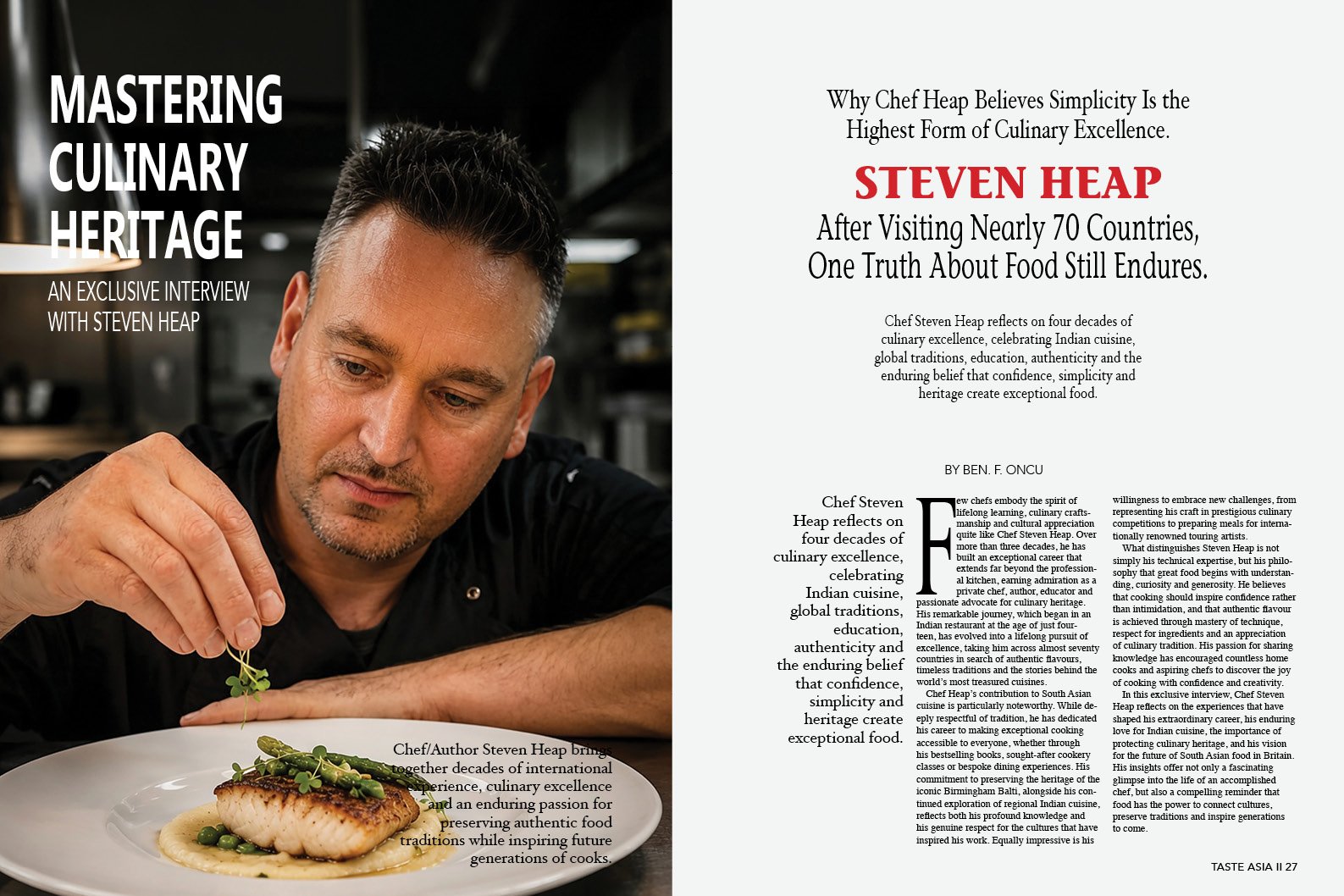
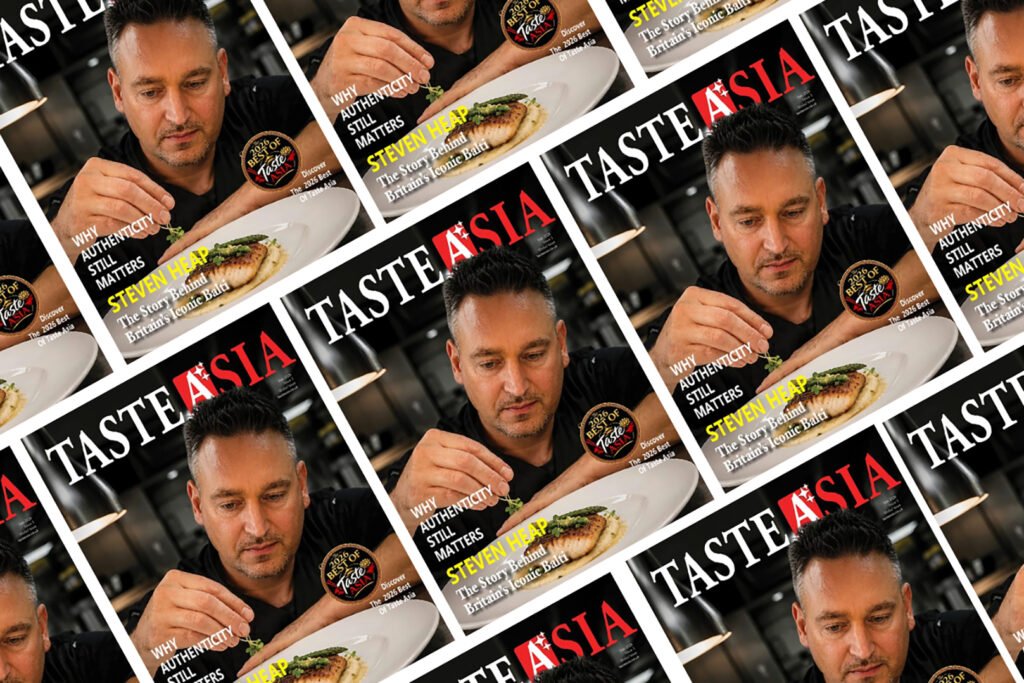
Steven Heap Takes the Cover of Taste Asia as Magazine Honours His Culinary Journey
Acclaimed Chef, Author and Educator Steven Heap Receives the Flavours of Asia Award Alongside an Exclusive Cover Interview Celebrating Simplicity, Heritage and More Than Three Decades in Food
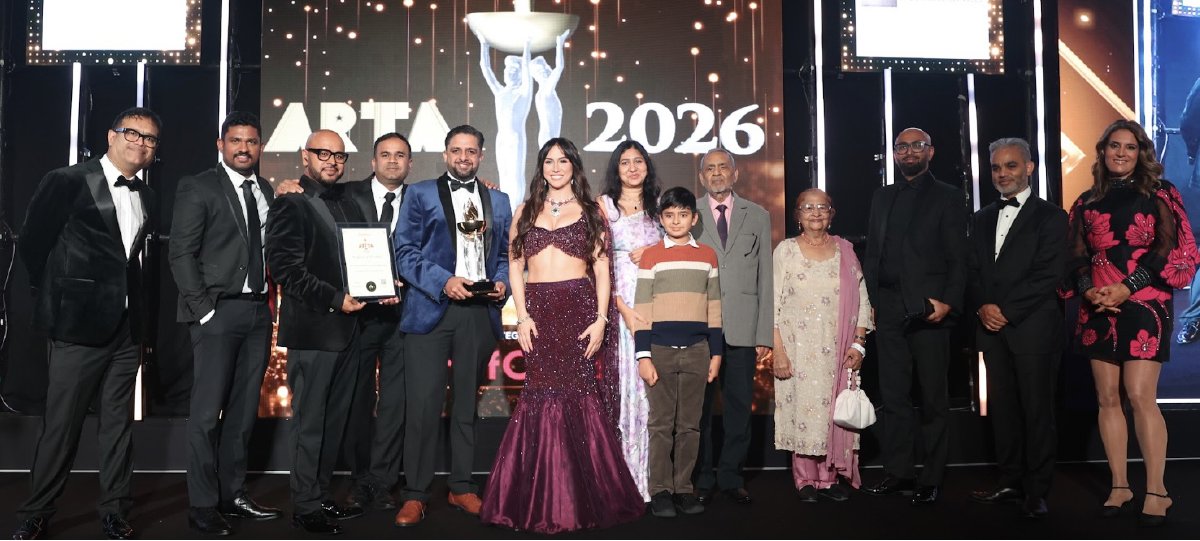
Awards presented to Steven Heap