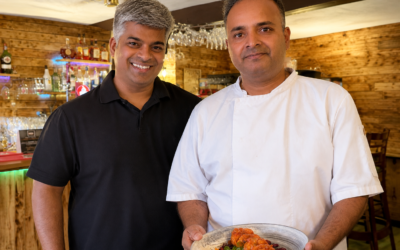
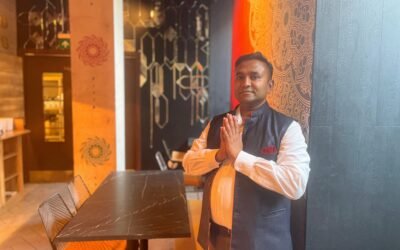




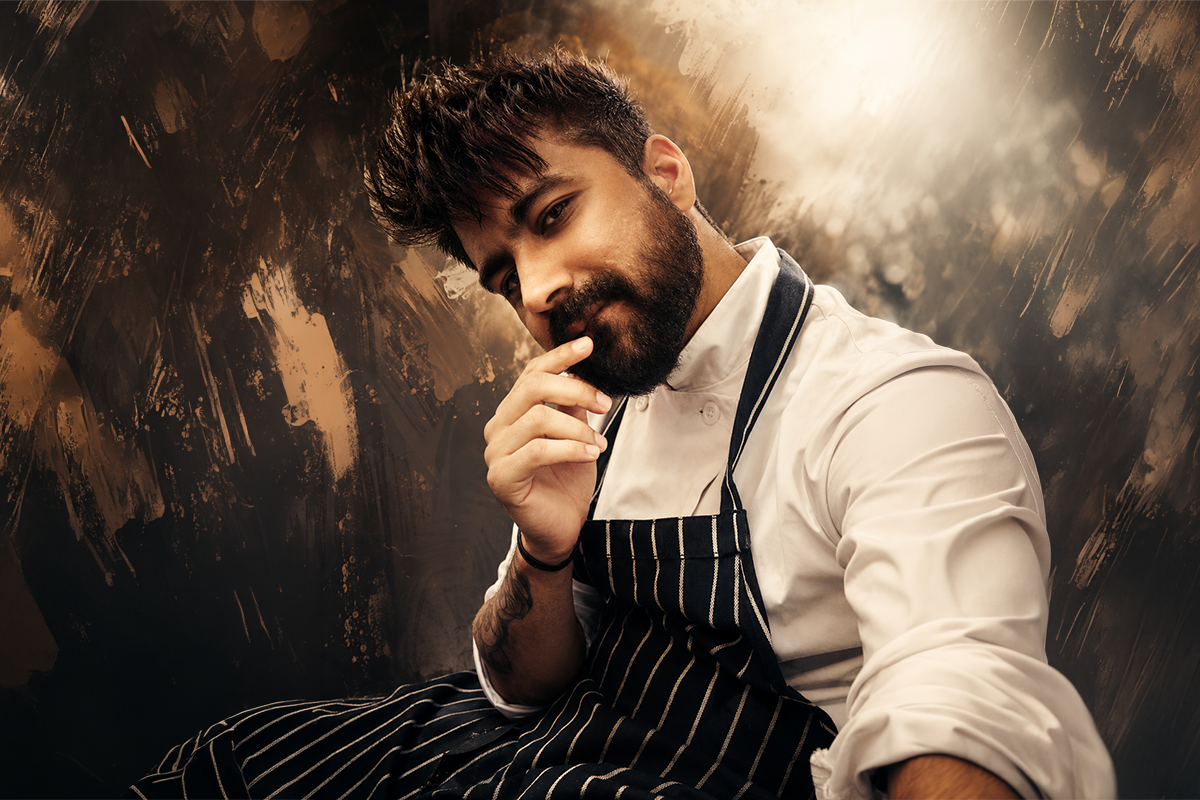
PHOTO: Chef Rohtash Kanwal brings together creativity, discipline and leadership as he builds a career shaped by modern hospitality and Asian flavours.
Leadership, Asian Flavours And The Pursuit Of A Memorable Guest Experience
Chef Rohtash Kanwal discusses leadership, authenticity, Asian flavours, sustainability and modern hospitality, revealing how discipline, creativity and teamwork shape his ambition to become an Executive Head Chef in Dubai eventually.
C hef Rohtash ‘Rohi’ Kanwal is an accomplished Senior Sous Chef known for his disciplined leadership, culinary creativity and commitment to high standards. After gaining experience in Dubai, he moved to the UK in 2021, working with Holiday Inn and Novotel before joining Marriott.
Passionate about Asian flavours, team development and memorable guest experiences, Kanwal now aspires to become an Executive Head Chef. In this interview, he shares his culinary journey, leadership philosophy and ambitions for the future.
Can you take us back to the beginning of your journey? What first attracted you to professional cooking and the hospitality industry?
My journey into cooking started with a genuine passion for food and curiosity about how simple ingredients can be transformed into something special. What attracted me to the hospitality industry was the combination of creativity, discipline, and teamwork. A professional kitchen is a very dynamic environment, and I enjoyed the challenge of creating quality food while working as part of a team. With time, cooking became much more than a profession for me—it became a passion and a way of expressing myself.
Your career has developed from the kitchen into broader food and beverage leadership. How has being a chef influenced the way you now approach restaurant and hospitality management?
Being a chef has given me a very practical understanding of how a hospitality operation works. As a Senior Sous Chef, I understand that success is not only about preparing good food. It is also about planning, consistency, hygiene, teamwork, cost control, and delivering the right experience to the guest. My kitchen experience has taught me to stay calm under pressure and make quick decisions. It has also taught me that every member of the team plays an important role in the final guest experience.
Dubai has one of the most multicultural dining scenes in the world. How does working in such a diverse city influence the dishes, menus and experiences you create?
Working in a multicultural environment is a great learning experience for any chef. You meet colleagues and guests from different parts of the world, each bringing their own food preferences and cultural influences. It encourages me to keep learning and experimenting while respecting the authenticity of different cuisines. Dubai’s diverse audience also motivates us to create food that is exciting, approachable, and capable of connecting with people from different backgrounds.
At Ramzin, you are involved not only in food but in creating the overall guest experience. What do you believe turns an ordinary restaurant visit into something genuinely memorable?
A memorable dining experience is created when everything comes together—the food, service, atmosphere, presentation, and attention to detail. For me, consistency is extremely important. A guest should be able to return and receive the same level of quality every time. Beyond that, genuine hospitality makes a big difference. When guests feel welcomed, respected, and cared for, they remember the experience.
When you are developing a menu, how do you balance authenticity with the expectations of an international customer base?
I believe authenticity should always be the foundation. At the same time, we need to understand our guests and their preferences. When developing a dish, I focus on maintaining the traditional character and key flavors while considering presentation, portion size, and accessibility for an international audience. The objective is not to change the identity of a dish, but to present it in a way that allows more people to appreciate it.
Asian cuisine is becoming increasingly global, but customers are also becoming more knowledgeable and demanding. How have you seen diners’ expectations change during your career?
Guests today are much more knowledgeable about food. They understand ingredients, cooking techniques, and different cuisines, and many of them actively look for authenticity and quality. They also expect consistency and value. This has made chefs more responsible because we cannot simply rely on presentations. The food must be delivered in terms of flavors, quality, and overall experience.
What ingredients, flavors or cooking techniques from Asian cuisine inspire you most, and are there particular dishes that you feel represent your own culinary personality?
I am particularly inspired by the balance of flavors in Asian cuisine. Sweet, sour, salty, spicy and umami flavors can come together beautifully when they are balanced correctly. I also enjoy working with fresh herbs, spices, ginger, garlic, chilies, and aromatic ingredients. I prefer food that has depth and character but is still balanced. I believe my culinary personality is reflected in dishes that are flavorful, well-presented, and not unnecessarily complicated.
A successful restaurant needs creativity in the kitchen but also strong commercial discipline. How do you balance food quality, portion sizes, ingredient costs and profitability without compromising the guest experience?
It comes down to planning and discipline. As chefs, we need to understand that every ingredient has value. Proper portion control, accurate recipe specifications, inventory management, minimizing food waste and careful purchasing all contribute to profitability. At the same time, I would never want cost control to compromise the quality of food. The goal is to work smarter and use ingredients efficiently while maintaining the standards expected by the guests.
Leadership is particularly important in a busy kitchen and restaurant environment. What is your approach to motivating chefs and front-of-house teams during demanding services?
The most important thing during a busy service is to remain calm. If the leader becomes stressed, that pressure quickly spreads throughout the team. I believe in clear communication, leading by example, and supporting the team when challenges arise. I also believe in recognizing people’s efforts. A kitchen works best when everyone understands their role and feels that they are contributing to the success of the operation. At the same time, discipline and accountability are essential in a professional kitchen. Respect for standards and respect for each other has to go hand in hand.
Sustainability, food waste, and responsible sourcing are becoming increasingly important across hospitality. What practical changes do you think restaurants can make without sacrificing quality?
A lot can be achieved through better planning. Accurate forecasting, proper storage, good inventory rotation, and portion control can significantly reduce food waste. We can also make better use of ingredients by finding creative ways to use suitable trimmings and secondary cuts rather than simply throwing them away. Responsible purchasing and working closely with suppliers are equally important. Sustainability is not only good for the environment; it also encourages kitchens to become more efficient and financially responsible.
Social media has transformed the way restaurants and dishes are discovered. Do chefs now have to think about how a plate will look on Instagram as much as how it will taste?
Presentation is definitely important today because social media has become a major way for guests to discover restaurants. A visually appealing dish can create curiosity and encourage someone to visit. But for me, the taste will always come first. A dish can look beautiful in a photograph, but if the flavour doesn’t deliver, the guest will not remember it positively. The ideal plate should be visually appealing, technically well-executed, and, most importantly, delicious.
Looking towards the future, what would you still like to achieve professionally, and is there a restaurant concept, signature dish or culinary project you dream of creating one day?
I would like to continue developing as a chef and as a leader. There is always something new to learn in hospitality, whether it is a new technique, cuisine, ingredient, or approach to leadership. One of my ambitions is to eventually create a culinary concept that reflects my experience and personality—a place where the food is the focus, but where the complete guest experience is equally important. I would like people to remember not only what they ate, but how they felt when they experienced it.
If you could eat only one Asian dish for the rest of your life, what would you choose?
I would probably choose Biryani. It has so many layers of flavor and aroma, and there are countless ways to prepare it. It’s one of those dishes that can be comforting, exciting, and satisfying at the same time.
What is the strangest food combination you secretly enjoy but would probably never put on your restaurant menu?
Chefs are always experimenting, so I have definitely tried some unusual combinations! Sometimes the strangest combinations are the ones that teach you something about flavor. But there are definitely a few experiments that are better left as kitchen experiments rather than appearing on a menu!
If you were not working in hospitality at all, what do you think Rohtash Kanwal would be doing today?
Honestly, I think I would still be doing something where creativity, discipline, and people are involved. Cooking has taught me to enjoy challenges and constantly improve, so I would probably find a career where I could continue learning and creating something. But I think hospitality chose me as much as I chose hospitality!
Imagine we enter your kitchen at midnight after a very busy service — what guilty-pleasure snack are we most likely to catch you eating?
After a long service, I’m definitely not looking for anything complicated! Probably something simple, hot, and comforting. After spending hours cooking professionally, sometimes the best food is the simplest food you can have at the end of the day!
You Can Buy Reach, Not Trust
How Media Shapes a Restaurant’s Reputation
Digital advertising delivers reach, but media builds trust, reputation and authority. For restaurants, strong press relationships, local coverage, reviews and awards shape perception, strengthen visibility and support long-term growth.