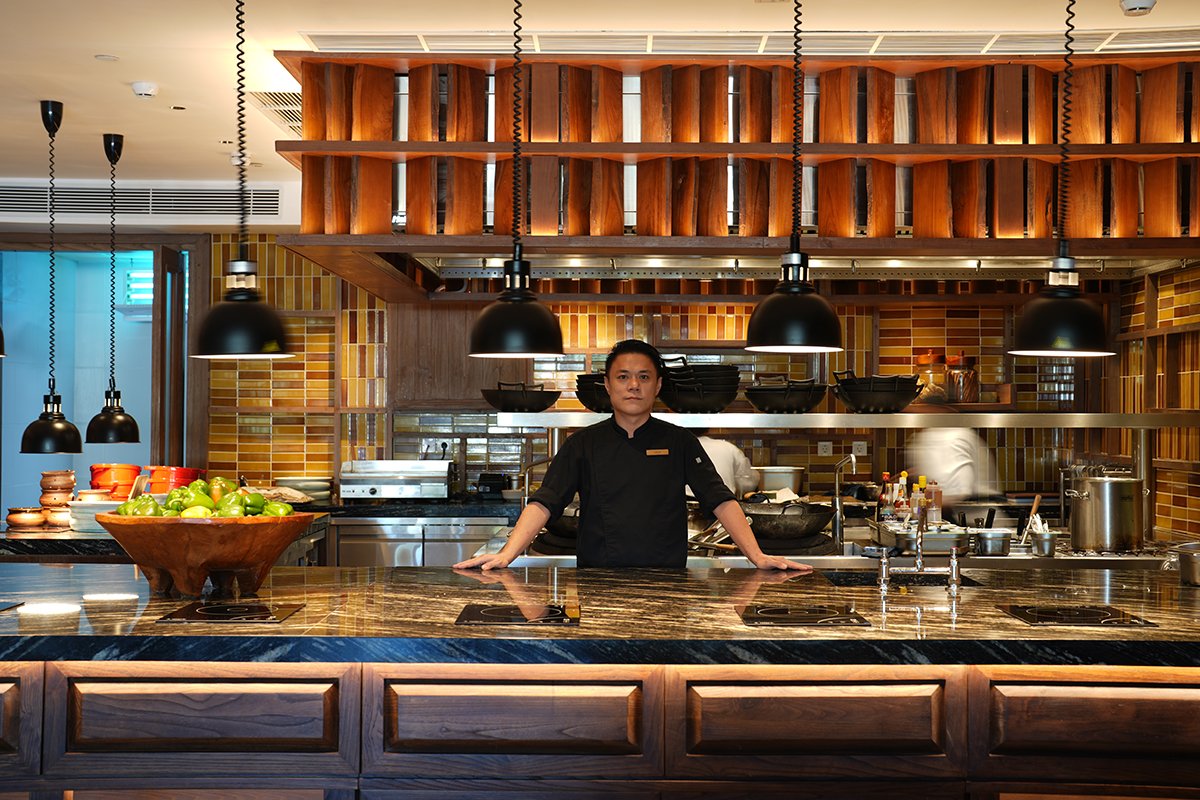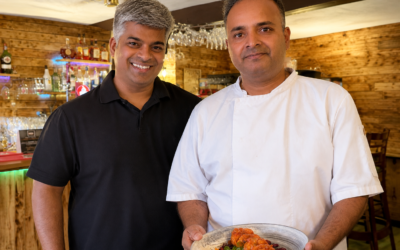
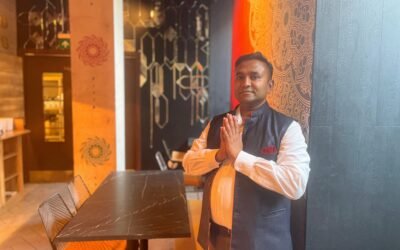

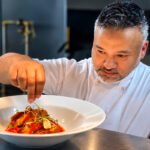
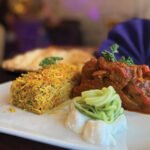
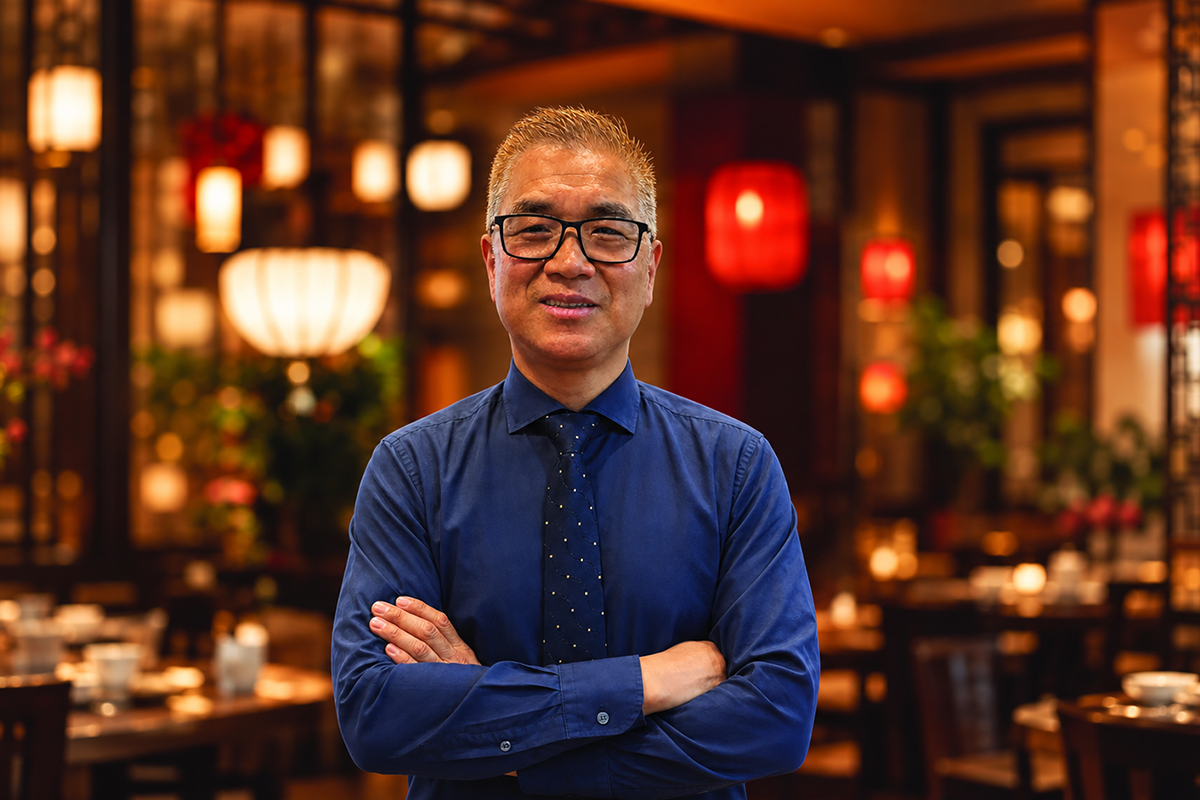
Photo: Chef and YEYE founder Jianxing Xiao draws on three decades of culinary experience, family recipes and the refined traditions of Huaiyang cuisine.
The Chef Bringing the Soul of Huaiyang Cooking to London
Chef Jianxing Xiao brings decades of Chinese culinary training to London, combining Huaiyang and Shanghai traditions with handmade noodles, dumplings, seasonal dishes and thoughtful adaptations for a diverse modern audience.
T rained in the culinary traditions of Yangzhou and Shanghai, Yound entrepreneur and Chef Jianxing Xiao has built his career around a lifelong love of Chinese food. After earning his professional chef’s certificate in China, Xiao moved to London and gained experience in the city’s fine-dining kitchens. He eventually set out to create a restaurant of his own—one that would introduce a wider audience to the comforting flavours of Chinese noodles, dumplings and handmade specialities.
In this interview, Xiao discusses the inspiration behind his signature beef noodles, the importance of carefully selected ingredients and his approach to balancing authenticity with London’s diverse tastes.
Chef Jianxing Xiao brings decades of Chinese culinary training to London, combining Huaiyang and Shanghai traditions with handmade noodles, dumplings, seasonal dishes and thoughtful adaptations for a diverse modern audience.
What inspired you to create your signature beef noodle dish, and how do you balance traditional flavours with the preferences of the UK market?
I have loved cooking since childhood. I trained professionally in Yangzhou and Shanghai, where I earned my professional chef’s certificate and had opportunities to learn from many respected chefs.
When I came to London, I wanted to continue developing my career, so I spent time working in fine-dining restaurants. Through that experience—and through conversations with both Chinese and international friends—I began to understand how people here responded to different Chinese flavours. Many loved the food, but some found certain dishes too spicy or unfamiliar.
That encouraged me to research the local market and think about how I could make traditional Chinese cuisine accessible to more people without losing its character. The response from my friends was very positive, and that was when the idea of opening my own restaurant began to take shape.
I eventually left my previous position to focus on creating a place that brought together my passion and my profession. My goal is to help more people discover the wonderful flavours and culture behind Chinese food.
We carefully balance our seasonings so that each dish retains its traditional identity while appealing to a broad range of tastes. We also introduce seasonal dishes and celebrate traditional Chinese festivals through special events. Cultural diversity is important to us, too, which is why we offer plant-based choices for vegetarian and vegan diners.
Highlights
- Jianxing Xiao trained professionally in Yangzhou and Shanghai before continuing his culinary career in London.
- His cooking is influenced by recipes and traditions passed down by his father.
- YEYE adapts the intensity of selected flavours while preserving the character of traditional Chinese cuisine.
- The restaurant introduces seasonal dishes and celebrates traditional Chinese festivals through special menus and events.
- Vegetarian and vegan choices reflect the diversity of YEYE’s London audience.
- The beef broth is slowly prepared with beef bones, chicken and other carefully selected ingredients.
- Different cuts of beef are cooked separately to achieve tenderness without losing their shape.
- YEYE’s noodles, wrappers and pan-fried buns are handmade.
- The pork buns combine a softly steamed upper wrapper with a crisp, golden base and juicy filling.
- Xiao’s cooking draws on Huaiyang and Shanghai culinary traditions.
- Traditional Chinese breakfast dishes, including youtiao, soy milk and handmade buns, are planned for the menu.
- Xiao personally checks YEYE’s branches to maintain consistent preparation, flavour and presentation.
- The Golden Supreme Beef Noodle Soup features a 23-centimetre prime rib simmered for three hours.
- YEYE prepares its broth without powdered flavour enhancers.
- Complimentary noodle refills reinforce the restaurant’s emphasis on generosity and value.
What goes into preparing the broth for your beef noodles?
Our broth is prepared with beef bones, chicken and a carefully chosen combination of other ingredients. It is cooked slowly for four to five hours, allowing the flavours and richness of the ingredients to develop gradually.
For the beef, we select high-quality cuts such as tendon and other collagen-rich pieces. Each ingredient requires a different cooking time, so the meat is simmered for around two to three hours to achieve the right texture. We want it to become tender and succulent while still holding its shape.
The broth and beef must complement one another. The result should be deeply satisfying, with a rich flavour and a comforting texture in every bowl.
How do you select ingredients for your dumpling fillings and achieve the right balance of flavour and texture?
The quality of the ingredients can determine the success of an entire dish. We use high-quality flour chosen to preserve the natural flavour, aroma and character of the wheat throughout the preparation process.
Our noodles and pan-fried buns are made entirely by hand. The wrappers for the buns do not require fermentation, and the filling includes a rich savoury aspic that melts during cooking. We fry the buns gently over a low heat so that the base becomes crisp while the filling remains juicy.
That contrast is essential: a delicate wrapper, a crisp base and a succulent centre. The flavour matters, but the experience of biting into the finished bun is just as important.
How do you innovate while preserving the authenticity of traditional Chinese cooking?
Our food is rooted in Huaiyang cuisine, one of China’s four great culinary traditions and a style known for its refined techniques, balanced flavours and careful presentation.
We draw particularly on the food traditions of Huaiyang and Shanghai, while also considering the tastes and ingredients familiar to diners in London. Innovation does not mean abandoning tradition. For us, it means respecting the original techniques and flavours while finding thoughtful ways to make the dishes relevant to the people and place around us.
Are there any forthcoming dishes that diners should look forward to?
We are preparing to introduce a selection of traditional Chinese breakfast dishes, including youtiao—Chinese fried dough sticks—served with soy milk, as well as handmade buns. As with the rest of our menu, these dishes will be made using carefully selected, high-quality flour.
We are also developing a new seasonal menu featuring our signature zhajiangmian, a much-loved Chinese noodle dish served with vegetables and a rich, savoury fried sauce.
It is a familiar and comforting dish in many Chinese households, and it also has a strong place in Chinese food culture. We are excited to introduce it to more diners and to continue sharing the breadth and variety of traditional Chinese cuisine.
Your recipes are inspired by traditions passed down from your father. How has that family heritage influenced YEYE?
My father’s recipes are an important part of YEYE’s identity. They connect the food we serve today with the flavours and techniques I grew up with. Over my 30 years as a chef, I have continued to develop my skills, but I have always respected that foundation.
For me, preserving these recipes is about more than reproducing a particular flavour. It is also about maintaining the care, discipline and generosity associated with traditional family cooking. Every dish we serve reflects both my father’s influence and the experience I have gained throughout my career.
YEYE now has four branches. How do you maintain consistent quality across every restaurant?
Maintaining consistency is one of my greatest responsibilities. I personally visit all four YEYE branches each day to inspect the food and make sure every restaurant is meeting our standards for flavour, preparation and presentation.
Customers should receive the same quality regardless of which location they visit. If a dish is not prepared correctly, we replace it immediately. If a core ingredient does not meet the required standard, we also replace the dish without charge. If we serve the wrong order, the customer does not pay for it.
These promises show our customers that we take responsibility for everything leaving the kitchen. Quality control is not something we check occasionally—it is part of our daily routine.
What makes the Golden Supreme Beef Rib Noodle Soup one of YEYE’s signature dishes?
The centrepiece of the dish is a 23-centimetre prime rib, which is slowly simmered for three hours until it becomes exceptionally tender. It is served in a completely homemade broth, without powdered flavour enhancers.
The broth needs to be rich and deeply savoury, but also balanced, aromatic and gently spiced. We do not want it to taste simply of salt and beef. It should have several layers of flavour that become more noticeable as you continue eating.
Texture is equally important. The exterior of the beef develops a beautiful caramelisation, while the meat becomes tender enough to come away from the bone with very little effort. Combined with our chewy, springy noodles, it creates a substantial and comforting bowl.
Your pork soup dumplings combine steamed and seared textures. How are they prepared?
We wanted to create a dumpling that offers the best qualities of both steamed and pan-fried styles. The upper part remains soft and delicately steamed, while the base is seared three times to develop a crisp, golden-brown finish.
Inside, we use centre-cut pork belly and a rich savoury broth. When the dumpling is cooked, the filling becomes succulent and the broth remains enclosed within the wrapper. The contrast between the tender top, crisp base and juicy centre is what makes the dish special.
The dumplings arrive very hot, so we recommend allowing the steam to escape before taking the first bite. A small amount of soy-vinegar sauce adds acidity and helps balance the richness of the pork.
How do side dishes such as the vinegar cucumber salad contribute to the meal?
A complete meal needs contrast and balance. Our beef noodles and pork dumplings are rich, warming dishes, so the vinegar cucumber salad offers something fresh, crisp and lightly spiced alongside them.
Its acidity refreshes the palate, while the cucumber provides a clean crunch between bites. Side dishes may appear simple, but we give them the same attention as our main courses because every element contributes to the overall dining experience.
What experience do you hope guests take away from a visit to YEYE?
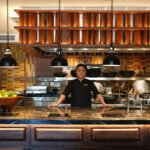
I want guests to experience authentic Chinese flavours in an environment that feels warm, comfortable and welcoming. At our Soho restaurant, traditional Chinese details such as lanterns and deep red accents are combined with natural wood and exposed brick, bringing together heritage and contemporary London.
Most importantly, I want people to remember the care behind the food—from the family recipes and handmade dishes to the generous portions and personal quality checks. Whether someone visits us for the first time or returns regularly, they should feel confident that they will always be looked after and served food of a consistently high standard.