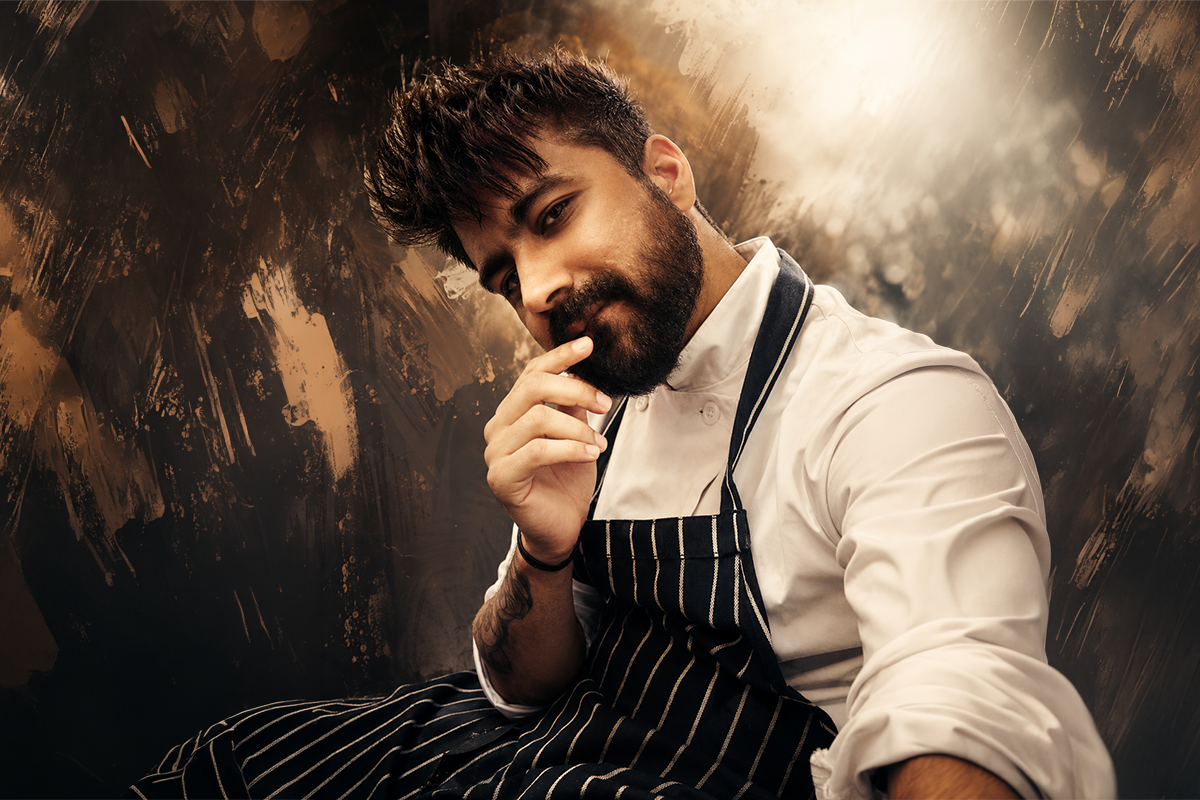







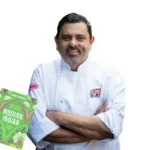
Photo: The chef behind Fusion Clan brings Kerala’s culinary heritage to Warwick, transforming regional ingredients and traditions into confident contemporary cooking.
From Malabar To Warwick, Tradition Finds A Modern Table
Fusion Clan brings Kerala to historic Warwick through fragrant prawns, heritage Kaima rice, slow-cooked lamb and rare bamboo rice, delivering regional Indian cooking with restraint, character and cultural conviction.
Warwick is the sort of English town that rewards walking. Timber-framed houses lean into streets shaped by centuries, Georgian façades sit alongside older buildings, and the imposing presence of Warwick Castle ensures that history is never particularly far away. Museums, independent shops, old pubs and restaurants give the town centre a character that feels lived-in rather than preserved merely for visitors.
There is, however, another Warwick emerging alongside the historic one. Its increasingly varied dining scene reflects a Britain whose culinary identity has expanded far beyond traditional geographical boundaries. Indian food, of course, has long been woven into British life. But restaurants such as Fusion Clan are asking diners to look beyond the familiar curry-house vocabulary and towards something more regional, personal and culturally specific.
At Fusion Clan, that journey leads principally to Kerala and the Malabar coast of southern India.
The restaurant describes its philosophy in three words: Comfort. Craft. Culture. It sounds like the sort of slogan that could easily remain on a website. Over the course of this meal, however, those words began to make considerably more sense.
A Dining Room Without Pretence
Fusion Clan does not announce itself through extravagance. Its dining room is warm, modest and pleasingly unselfconscious.
Dark charcoal walls meet exposed brick and natural timber. Wooden tables and chairs line either side of the room, while a timber-fronted bar provides a focal point towards the rear. Framed pictures and exposed structural elements add personality without turning the restaurant into a themed approximation of India.
That restraint matters. There are no theatrical gestures required to tell you where the cooking comes from. The food is permitted to do that.
Pendant bulbs cast pools of amber light across the tables, softening the darker walls and creating an atmosphere particularly well suited to a long evening meal. Tables are sufficiently separated that conversation does not immediately become communal property, yet close enough to preserve the gentle energy of a neighbourhood restaurant.
The wooden chairs favour practicality over luxury, but the room is comfortable. Tables were neatly prepared, glassware polished and the visible dining areas well maintained during our visit.
Fusion Clan feels neither formal nor aggressively casual. You could come for an ordinary midweek supper or something more celebratory and not feel improperly dressed for either.
Then the prawns arrive.
Prawn Masala Fry
A good starter should make you curious about what the kitchen intends to do next. Fusion Clan’s Prawn Masala Fry accomplishes precisely that.
The inspiration comes from Kerala, where a long coastline has helped create one of India’s great seafood traditions. Here, succulent prawns are coated with South Indian spices and pan-fried until their surfaces develop a delicate caramelisation.
The important word is delicate.
There is always a danger with heavily spiced seafood that the seasoning becomes the principal ingredient and the seafood merely its delivery system. Fusion Clan shows greater discipline. The prawns remain juicy and naturally sweet, with just enough searing around their edges to provide contrast.
Fresh curry leaves bring their unmistakable perfume. Garlic provides depth. Lemon arrives like punctuation, cutting through the warmth and leaving the palate refreshed rather than exhausted.
And the chilli knows when to stop.
That may be the most impressive part. Heat is present, but heat is not mistaken for flavour. The spices build around the prawns rather than burying them.
There is little unnecessary decoration here, either. The dish succeeds through the quality of its central ingredient, accurate cooking and intelligent seasoning.
It is an assured opening and an introduction to one of the recurring ideas behind this meal: spice used not to demonstrate power, but to reveal flavour.
The Biriyani That Explains Fusion Clan
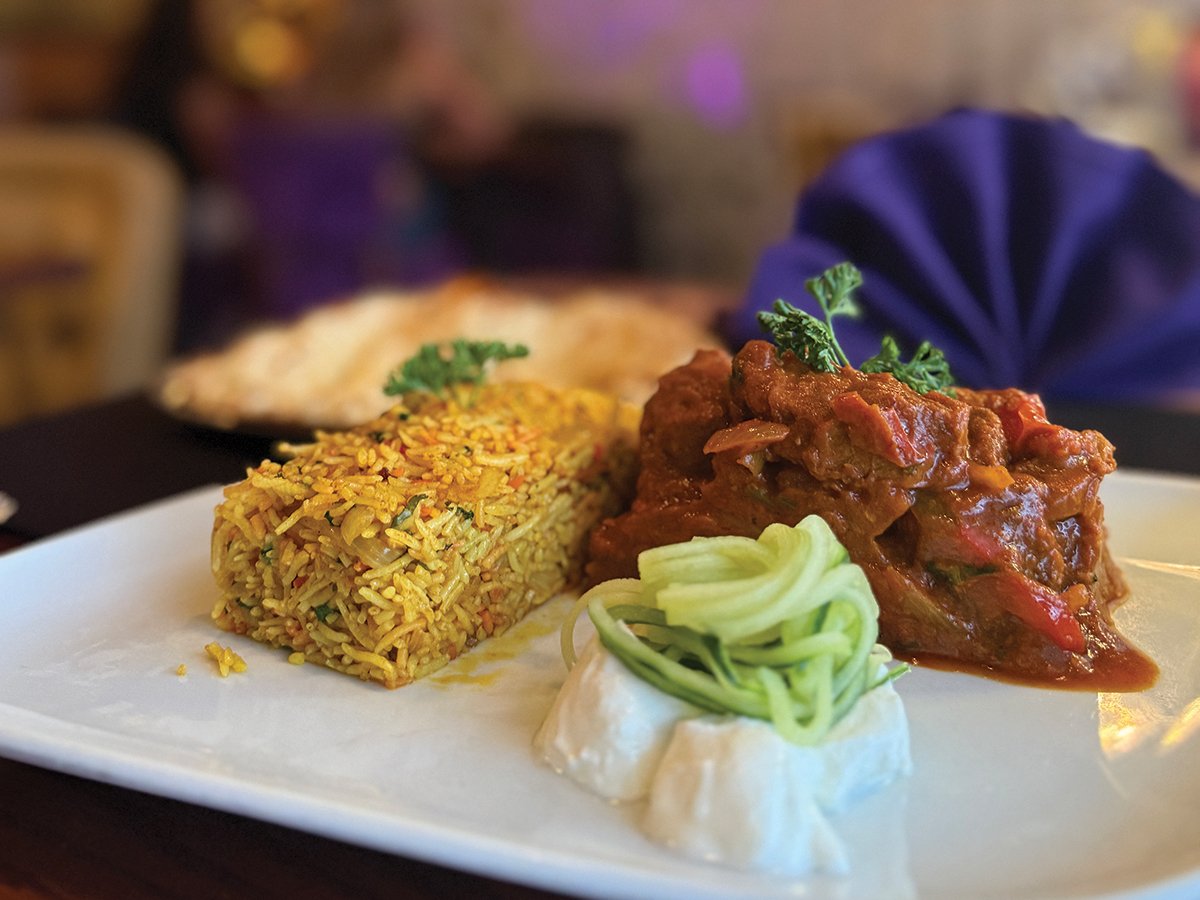
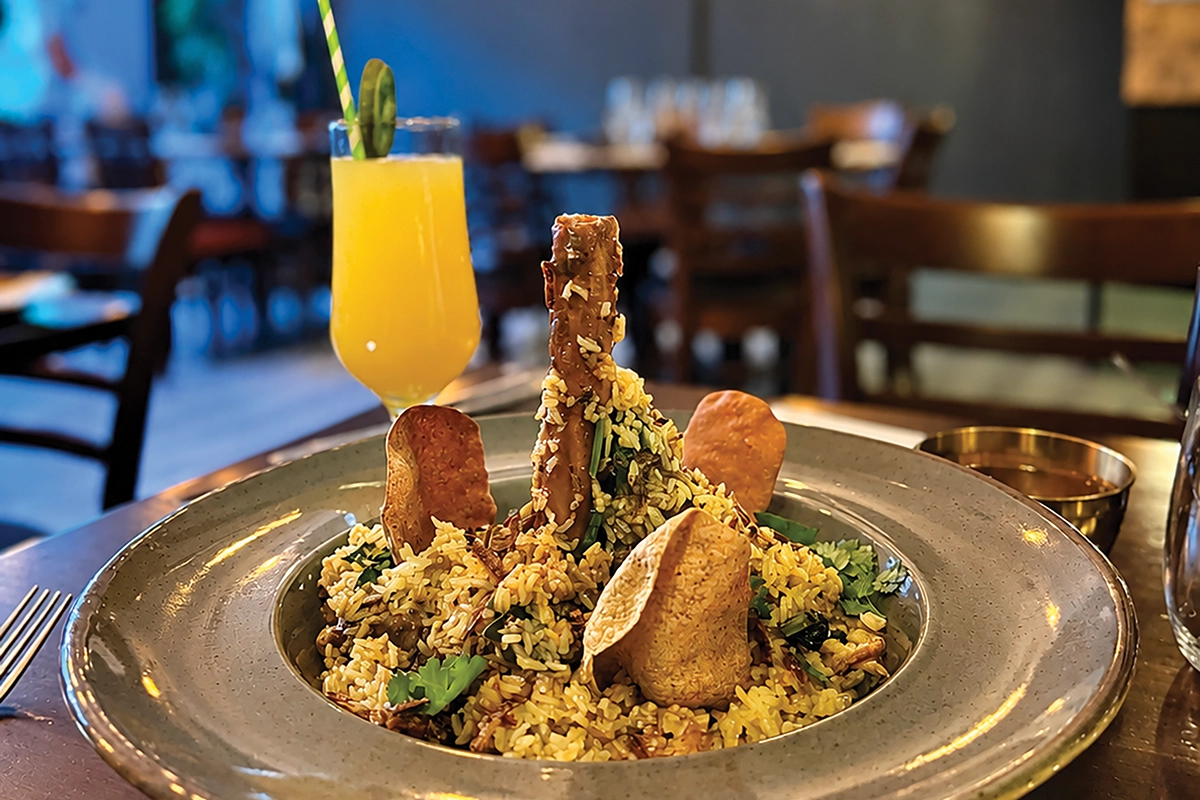
Then comes the dish around which a visit to Fusion Clan could reasonably be constructed: the Signature Malabar Lamb Shank Biriyani.
If your understanding of biriyani begins with long, elegant strands of basmati rice, the first surprise is waiting beneath the lamb.
Fusion Clan uses Wayanadan Kaima rice, a heritage rice associated with Kerala’s Wayanad region and traditionally used in Malabar biriyani. Its grains are shorter than basmati and its personality is quite different. Kaima absorbs stock, spices and ghee eagerly, yet maintains enough individual character to prevent the biriyani becoming a homogeneous mass.
This is not rice relegated to the side of the plate. It is central to the dish.
And sitting commandingly above it is the lamb shank.
Slow cooking has rendered the meat exceptionally tender. It yields from the bone with little persuasion, carrying the deep richness of lamb while avoiding the heaviness that can turn a generous main course into an endurance test.
More importantly, the lamb and rice taste as though they belong together.
The juices from the meat find their way into the fragrant Kaima grains; spices move between the two; the richness of ghee provides another layer without taking command. Instead of tasting a piece of lamb accompanied by seasoned rice, you experience a dish whose components have been allowed to become acquainted with one another.
Again, restraint is crucial.
The biriyani is aromatic and warming, but it does not shout. Nothing has been amplified merely for effect. There is complexity, but not confusion; richness, but not excess.
The lamb shank gives the plate considerable visual drama, yet this is not Instagram architecture disguising an ordinary dish. The spectacle is justified by what follows when the fork touches the meat.
There is also something quietly educational about this biriyani. British diners have eaten Indian food enthusiastically for generations, but regional distinctions can still disappear beneath the enormous umbrella of “Indian cuisine”. Fusion Clan’s use of Kaima rice offers a reminder that a biriyani from Malabar need not resemble one from Hyderabad, Lucknow or elsewhere on the subcontinent.
This is where the restaurant’s stated commitment to culture becomes most convincing. Tradition is not presented as museum material. It is placed on the table, generously portioned and meant to be eaten.
The Malabar Lamb Shank Biriyani is the dish I would return for. It is fragrant, comforting and deeply satisfying, but its greatest achievement is that it has something to say.
Dessert From the Forest
Following a lamb shank biriyani with rice pudding might sound like an unnecessarily enthusiastic commitment to grain.
Fusion Clan has a surprise.
Its Traditional Bamboo Rice Pradhaman is made from Mulayari, or bamboo rice, an unusual ingredient associated with the forests of Kerala’s Western Ghats, including Wayanad. Bamboo rice is not cultivated in the conventional sense; it is the seed produced when bamboo flowers, something that can happen only after very long intervals.
Suddenly dessert comes with botany.
The pradhaman is slowly cooked with coconut milk, jaggery and aromatic spices. The result is comforting and creamy, but thankfully not cloying.
Jaggery is particularly important. Rather than the straightforward sweetness of refined sugar, it contributes something darker and more rounded, with suggestions of caramel that sit naturally alongside the nuttiness of the bamboo rice.
Coconut milk brings richness. The rice itself provides texture and a gentle chew, while the crunchy topping introduces contrast to the softer mixture underneath.
It is not a dessert engineered to produce an immediate sugar rush. Its pleasures reveal themselves more gradually: nutty, earthy, creamy, gently spiced and warmly sweet.
Served in a broad ceramic bowl, the presentation brings the dish neatly into the contemporary dining room without attempting to disguise its origins.
For somebody encountering bamboo rice for the first time, there is inevitably novelty. But novelty alone cannot sustain a dessert beyond the first spoonful. This one has enough flavour and textural interest to make the ingredient worth remembering.
And as the final course of this particular meal, it makes unusual sense. The journey that began beside Kerala’s coastline with prawns and travelled through Malabar’s biriyani tradition ends in the forests of the Western Ghats.
More Than Fusion
The word fusion has endured a complicated life in restaurants. At its worst, it can mean cuisines combined because somebody discovered they could be. Fusion Clan makes a more persuasive argument.
The restaurant’s strongest dishes are not interesting because they abandon tradition, but because they understand it.
The Prawn Masala Fry demonstrates the intelligence of restraint. The Malabar Lamb Shank Biriyani makes an unfamiliar heritage rice essential rather than ornamental. The Bamboo Rice Pradhaman turns a rare regional ingredient into a dessert that is simultaneously a pleasure and a conversation.
Together, they make the restaurant’s mantra — Comfort. Craft. Culture. — feel less like branding and more like a description of dinner.
There are grander dining rooms and more theatrical plates. Fusion Clan appears largely uninterested in competing on those terms. Its attraction lies elsewhere: in patient cooking, distinctive ingredients and the confidence to introduce diners to Kerala without diluting every regional detail into something more familiar.
That makes its location particularly fitting. Warwick is a town accustomed to carrying its history into the present rather than leaving it entirely in the past. Fusion Clan, in its own culinary way, is attempting something similar.
Amid the castle, historic streets and centuries-old architecture, here is another kind of heritage being preserved — not behind glass, but in curry leaves, Kaima rice, jaggery and bamboo seed.
And, fortunately, you are encouraged to eat it.