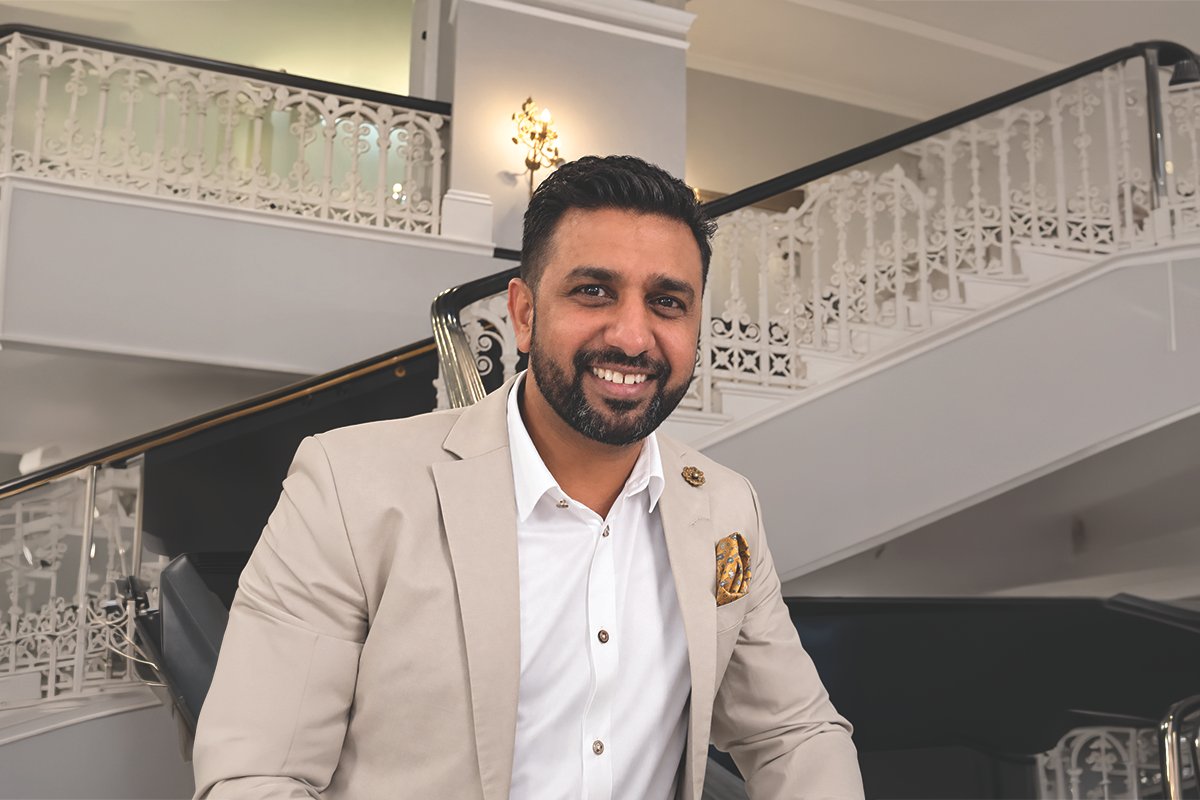
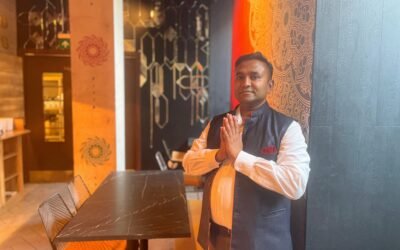







Photo: Ahmed combines entrepreneurial instinct with remarkable resilience, protecting his family’s culinary heritage while confidently preparing Bombay for a new generation.
For Iftahar Ahmed, 45 Years Is Only Part of the Bombay Story
Iftahar Ahmed reflects on Bombay Restaurant’s 45-year journey, revealing how family, fresh ingredients, calculated risks, innovation and old-fashioned hospitality have helped a Leamington Spa institution evolve across generations.
Few restaurants earn the privilege of becoming part of a town’s identity. Bombay Restaurant in Leamington Spa has done precisely that. For more than four decades, the family-run establishment has welcomed generations of diners, weathered profound changes in Britain’s restaurant industry and continued to evolve without surrendering the traditions that first established its reputation. At the heart of that remarkable journey is Iftahar Ahmed, a restaurateur whose understanding of hospitality has been shaped not in a classroom, but through a lifetime spent on the restaurant floor, behind the scenes and alongside his family.
Ahmed’s story is one of persistence, instinct and an admirable respect for legacy. Beginning as a teenager working part-time in the restaurant founded by his father and uncle in 1980, he gradually assumed greater responsibility and helped transform Bombay for a new generation. His approach has never been simply to preserve what came before. He has modernised the restaurant, embraced digital marketing, encouraged culinary experimentation and invested in the business even during the uncertainty of the pandemic.
That willingness to evolve is perhaps best illustrated by Bombay’s cooking. Traditional curries remain important, but Ahmed believes diners should experience the individual character of spices rather than simply overwhelming heat. At the same time, creations such as the restaurant’s Signature Sea Bass demonstrate a confidence to move beyond convention, bringing together crisp fish, mustard marinade, fresh fruit salsa and balsamic notes in an unexpectedly harmonious dish.
What is particularly impressive about Ahmed, however, is the pride he takes in the achievements of others. He speaks warmly of his son-in-law’s development as a chef and of his daughter’s growing responsibility within the business. Awards matter to him, but ensuring that another generation can carry Bombay forward appears to matter even more.
For Taste Asia, Ahmed represents something increasingly valuable in hospitality: a restaurateur who understands that longevity cannot be achieved through tradition alone. It requires consistency, adaptation, courage and genuine affection for the people who walk through the door.
Our conversation with Iftahar hmed reveals the determination behind one of Leamington Spa’s enduring Indian restaurants — and a family legacy that, after more than 45 years, is still being written.
Ahmed combines entrepreneurial instinct with remarkable resilience, protecting his family’s culinary heritage while confidently preparing Bombay for a new generation.
Interview Highlights
- A Story Beginning in 1980 — Bombay was established by Ahmed’s father and uncle, with Ahmed joining the restaurant while still a teenager.
- Learning Through Experience — Ahmed believes decades on the restaurant floor taught him lessons no business textbook could provide.
- Adapting to Britain’s Changing Dining Culture — Bombay evolved from the era of post-nightclub curries to a more considered evening dining experience.
- Tradition With Innovation — Ahmed believes successful Indian restaurants must protect their culinary foundations while introducing new ideas.
- A Fresh Approach — He remains closely involved with ingredients and places particular importance on freshness and quality.
- Signature Sea Bass — Developed through experimentation, the dish demonstrates Bombay’s willingness to move beyond conventional curry-house expectations.
- Courage During COVID — Despite enormous uncertainty, Ahmed invested in expanding the restaurant’s upstairs dining space.
- The Next Generation — His daughter and son-in-law are increasingly important to Bombay’s future.
- Awards With Personal Meaning — Recognition for both the restaurant and his son-in-law’s work in the kitchen carries particular significance for Ahmed.
- Experience Over Expansion — His ambitions have matured from simply becoming bigger to preserving quality and ensuring the family legacy continues.
Tell us a little about yourself and how you became involved with Bombay Restaurant.
I have been in the UK since I was about six years old, and my family has been here for many years. In 1980, my father and uncle opened Bombay Restaurant.
I was still at school at the time, but when I was around 14 or 15, I started working part-time at the restaurant. After leaving school, I joined the business full-time and worked alongside my father and uncle.
As the years went by, I gradually took on more responsibility and eventually helped take Bombay to another level. It has been a wonderful journey. Bombay has remained in our family for more than 45 years, and I am very proud that we have kept that legacy alive.
The next generation is now involved too. My daughter works in the business, and my son-in-law is an important part of the restaurant as well. For me, seeing the family continue what my father and uncle started is very special.
Bombay Restaurant has been part of Leamington Spa since 1980. What inspired your family to open the restaurant, and what do you remember about those early days?
The restaurant was originally opened by my father and uncle. Before that, members of the family worked in car factories, including Jaguar. They wanted to become self-employed and build something of their own.
When the opportunity came to take on a restaurant in Leamington Spa, they decided to go for it. My older brother was also a chef, so there was already some experience within the family.
I think the main motivation was independence — having our own place, working for ourselves and creating something that could grow over time. That was really where the Bombay story began.
Indian dining in Britain has changed enormously over the past four decades. How has Bombay adapted while protecting its traditional flavours?
It has changed tremendously. When I first became involved, Indian restaurants could be busy until three or four o’clock in the morning. People would come after pubs and nightclubs to have a curry.
Over time, that changed. Kebab shops and other late-night food businesses became more popular, and Indian restaurants gradually became less about eating after a night out and more about having a proper dining experience.
We adapted our opening hours accordingly. Bombay used to stay open until around three in the morning on Fridays and Saturdays. Eventually we reduced the hours, first to midnight and later to around 11pm.
Today, people come at six or seven in the evening because they want to sit down, relax and enjoy the whole experience. It is much more about food, service and atmosphere.
We have also continued updating the restaurant. Every year we make improvements and change certain things while keeping the character of Bombay.
Marketing has changed too. Years ago, restaurants simply opened their doors and waited for customers. Today you have Instagram, Facebook, websites and many other ways of communicating with people. You have to appeal to both your long-standing customers and the younger generation.
Bombay’s walls display an extraordinary collection of awards. Which achievements mean the most to you personally?
There are probably two that mean the most to me.
One is winning Restaurant of the Year. For me, that was a huge achievement because Bombay is a family restaurant. My parents and the generation before me worked extremely hard, but in those days there wasn’t the same focus on marketing, competitions or social media. They opened the restaurant, served their customers, closed the doors and went home.
Today, running a restaurant involves much more. You need to market the business, enter competitions, maintain your online presence and continually promote what you are doing.
The other award that means a lot to me is the recognition our chef has received because the chef is my son-in-law. I helped train him in the industry and showed him many aspects of the business. What he has achieved during the past few years has been unbelievable.
Of course, those awards belong to him, but I also feel very proud because I have been there in the background encouraging him, suggesting new ideas and helping develop dishes.
Your Signature Sea Bass is one of Bombay’s most distinctive dishes. How did the idea come about?
Every year or year and a half, I like to review the menu and introduce new dishes. Innovation is important because customers want to see something new, although you still have to respect the traditions of Indian cooking.
We introduced the sea bass around two years ago. Whenever we develop something new, we experiment in the kitchen first. We cook it, taste it ourselves and discuss whether it works before putting it on the menu.
The Signature Sea Bass starter was developed with a chef friend of mine whom I had worked with years ago. We worked together on the idea of serving the sea bass with salsa. We tried it, liked the result and decided to put it on the menu.
It has worked extremely well. Sometimes you have to experiment and trust your instincts.
After more than 45 years in hospitality, what have you learnt about running a successful restaurant that you could never learn from a business book or cookery school?
Everything!
You can study, get qualifications and earn a degree, but practical experience teaches you things that a classroom cannot.
In this business, you have to think on your feet because so many things can happen at once. You might have a problem with the gas, staff issues, deliveries arriving, takeaway orders coming in and a restaurant full of customers — and you have to manage all of those things at the same time.
You need to think quickly and make decisions.
If someone asked me whether I would rather go back and study hospitality at college or learn through practical experience, I would choose practical experience.
Working in the restaurant teaches you everything from what happens in the kitchen to how the food reaches the table, how deliveries are managed and how your staff are performing.
You learn by being there.
What is your favourite dish at Bombay?
I really like the Garlic Chilli Chicken Bhuna.
I also love spinach, so dishes such as Lamb Saag are among my favourites. I enjoy dishes where you can really taste the ingredients and the different spices rather than simply experiencing heat.
What makes great Indian food?
It should not be over-spiced or excessively hot. The flavours should remain in your mouth, and you should be able to identify the different ingredients.
Sometimes customers automatically ask for a vindaloo because they think Indian food needs to be extremely hot. I often encourage them to try something milder so that they can actually taste the spices.
With dishes such as Madras or Jalfrezi, you can taste the meat, peppers, green chillies and individual spices.
Once a curry becomes excessively hot, all you taste is chilli.
For me, good Indian food is about balance.
How do you keep customers coming back after so many years?
Food and service are probably the two most important things.
You also have to keep your premises clean, attractive and up to date. Customers notice everything.
Consistency matters as well. People return because they know what kind of experience they are going to receive.
What has been your proudest moment at Bombay Restaurant?
Winning major awards has certainly been one of my proudest moments.
We even received a letter from the Mayor congratulating us and recognising what Bombay has contributed to Leamington Spa.
Bombay has become part of the town. We have seen many restaurants come and go over the years, while we have continued through changing economic conditions, difficult periods and even COVID.
To come through all of that and still be here, still succeeding and still receiving recognition makes me extremely proud.
Tradition or innovation — which matters more?
You need both.
You have to keep the tradition, but you also need innovation. The important thing is finding the right balance.
If you change too much, customers may not like it because they still want the flavours and dishes they associate with Indian cuisine.
So you keep the foundations traditional while introducing new ideas carefully.
What makes Bombay different from other Indian restaurants?
Quality is extremely important to us.
We use fresh ingredients, and I am still personally involved in sourcing produce. I go out to buy fresh vegetables, and my son-in-law and I are involved in sourcing fresh fish.
We try to avoid frozen ingredients wherever possible.
I am also still actively involved in marketing and the overall direction of the business. Even after all these years, I like to know what is happening.
Bombay combines an Indian atmosphere and traditional food with the kind of service and dining experience British customers expect today.
What is next for Bombay Restaurant?
We have already been nominated for another award, which is very exciting.
At one stage, I thought about expanding much more and making the business considerably bigger. But sometimes bigger is not necessarily better.
Now I think the most important thing is protecting what we have built and making sure the next generation maintains the same standards.
My daughter and son-in-law are becoming increasingly involved, and I want them to keep Bombay at the same level, continue entering awards, maintain the quality and always stay on top of the business.
That continuity is more important to me than simply opening as many restaurants as possible.
How important is marketing to Bombay today?
Marketing is extremely important.
We have someone who helps us with our marketing, and we use social media as well as our own website. Everything is regularly updated, and we monitor how the business is performing.
I am still personally interested in marketing too.
The restaurant industry has changed. Years ago, you could simply open your doors and wait for people to walk in. Today, people discover restaurants online, look at photographs, read reviews and follow businesses on social media.
You have to keep communicating with your customers.
Is there another moment in Bombay’s history that you are particularly proud of?
One of my proudest decisions came during the COVID period.
We did very well with takeaway orders during lockdown, and when restaurants were eventually allowed to reopen under the government’s dining support schemes, we became incredibly busy.
Every weekend I was having to turn customers away because we simply did not have enough space.
I realised we were also losing large bookings, particularly around Christmas, because our downstairs dining room could only accommodate a limited number of people.
Despite all the uncertainty at the time, I decided to invest in opening the upstairs floor.
People questioned whether it was the right time to make such an investment because nobody knew what was going to happen with the economy or the restaurant industry.
But I believed that if we improved the restaurant and created additional space, it would benefit Bombay in the long term.
We completed the upstairs area and opened it just before Christmas. On our very first evening, we had a Christmas party upstairs.
That was a very proud moment for me. It showed that sometimes in business you have to believe in what you are doing, take a calculated risk and move forward even when circumstances are uncertain.
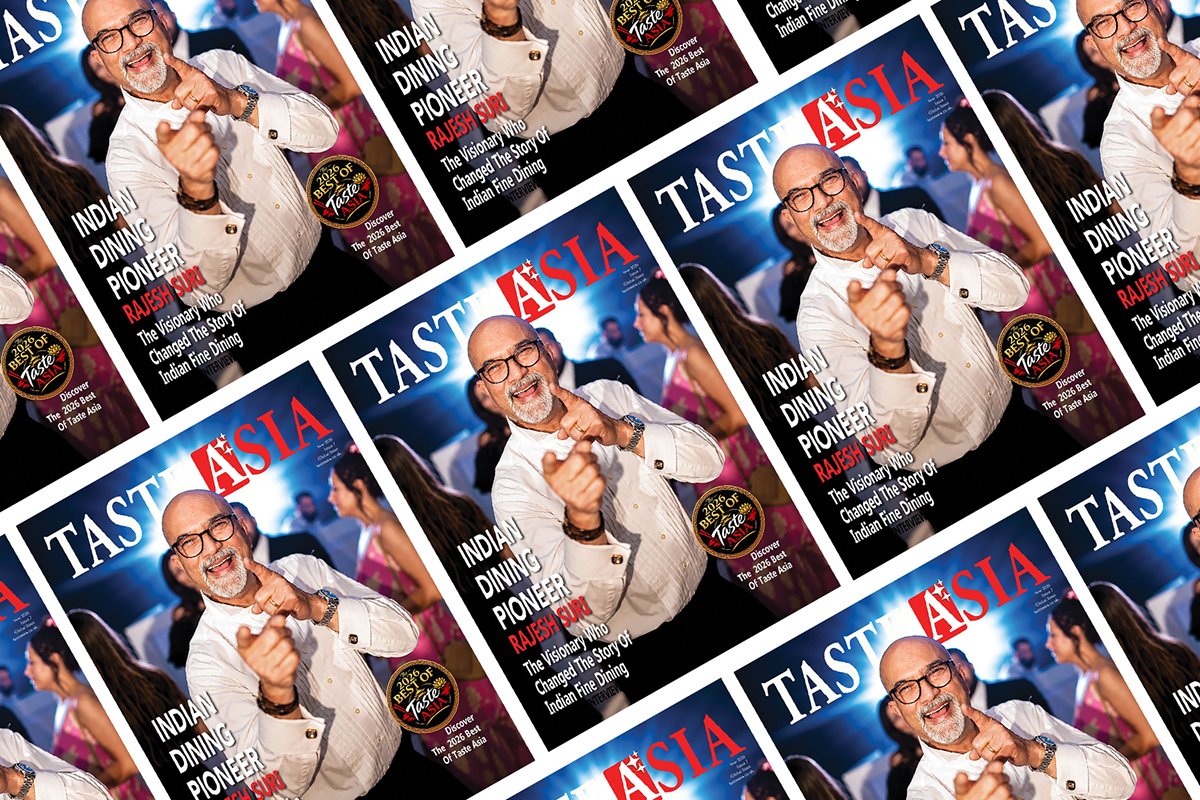
Click the Image to Read the Full Cover Story in Print
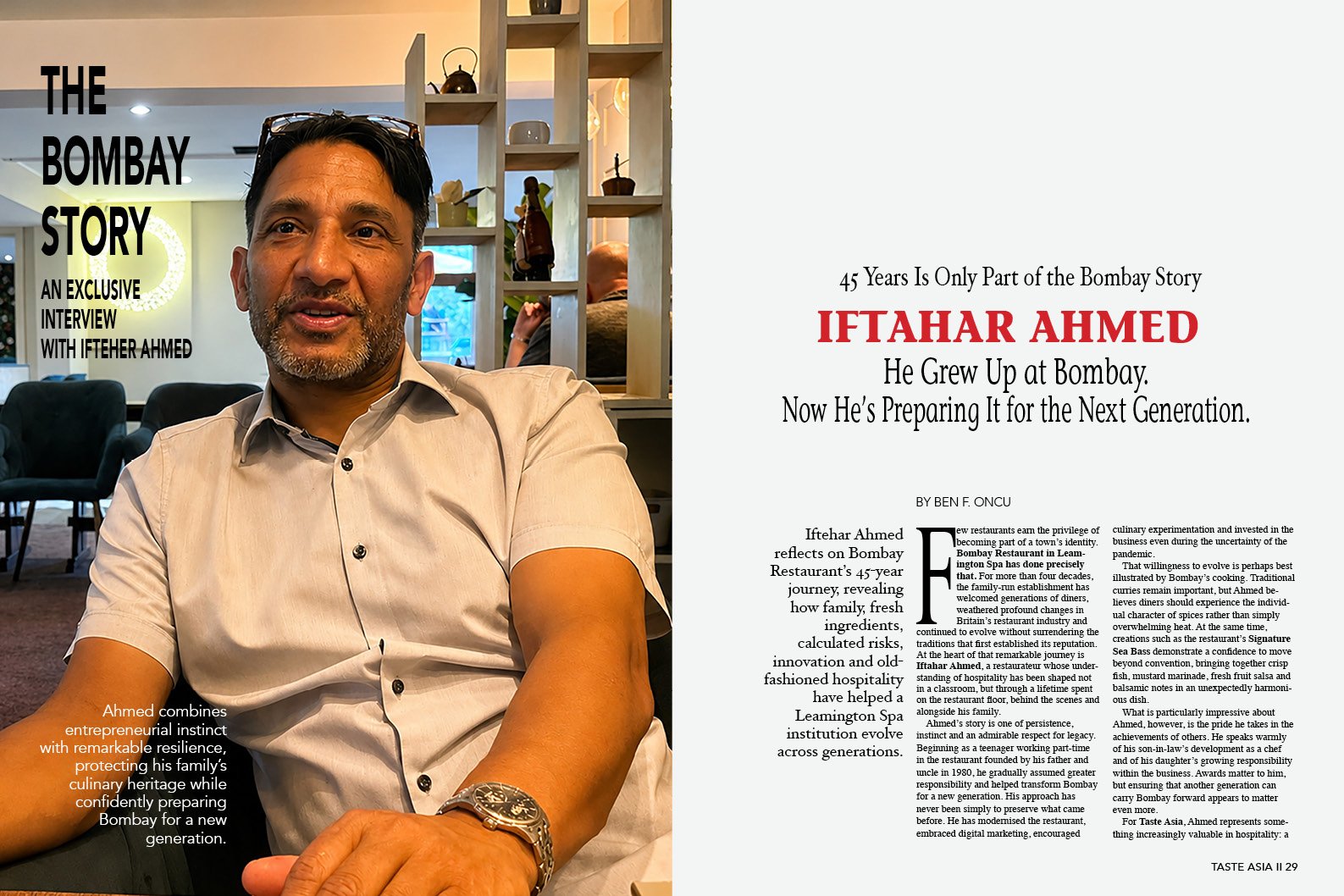
Iftahar Ahmed Takes the Cover of Taste Asia as Bombay’s 45-Year Legacy Enters a New Chapter
Bombay Restaurant combines 45 years of family tradition with fresh ingredients, thoughtful hospitality and confident innovation, crowned by a distinctive Signature Sea Bass that brings unexpected flavours beautifully together.

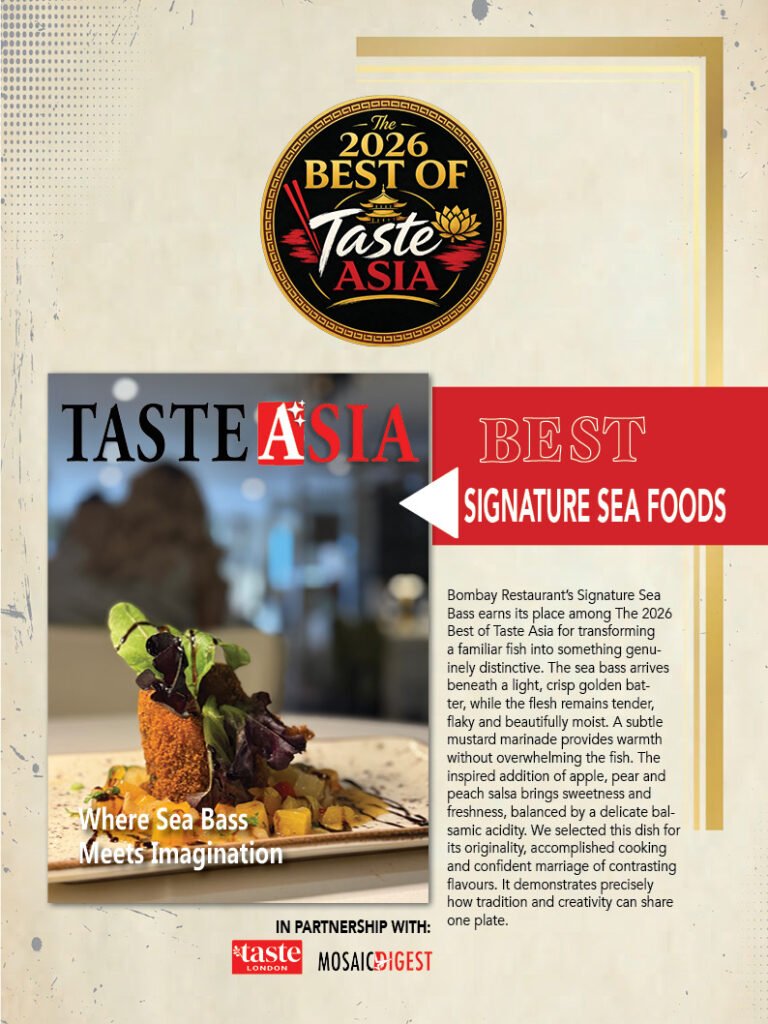
Bombay Restaurant’s Signature Sea Bass earns its place among The 2026 Best of Taste Asia for transforming a familiar fish into something genuinely distinctive. The sea bass arrives beneath a light, crisp golden batter, while the flesh remains tender, flaky and beautifully moist. A subtle mustard marinade provides warmth without overwhelming the fish. The inspired addition of apple, pear and peach salsa brings sweetness and freshness, balanced by a delicate balsamic acidity. We selected this dish for its originality, accomplished cooking and confident marriage of contrasting flavours. It demonstrates precisely how tradition and creativity can share one plate.
Awards presented to Iftahar Ahmed
-
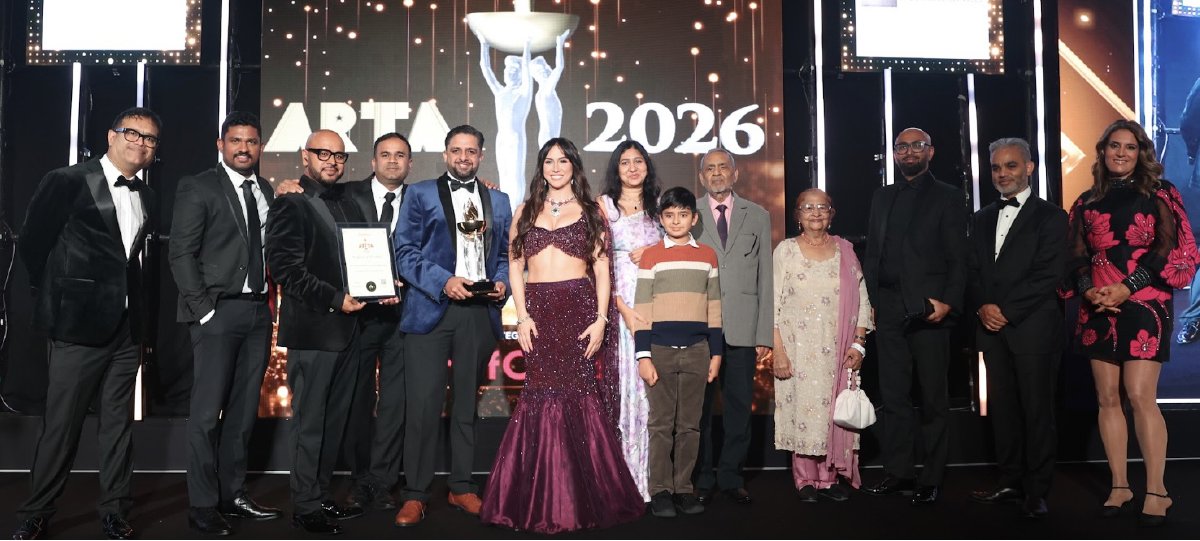
ARTA 2026: My Delhi Newcastle Leads a Nationwide Celebration of Asian Dining
My Delhi Newcastle has been named Champion of Champions at the Asian Restaurant and Takeaway Awards 2026, leading a winners’ list that stretches from Belfast and Glasgow to London, Liverpool and Bristol. The awards were presented at the London Hilton on Park Lane on 12 October. According to the organisers, more than 1,250 businesses across…
-
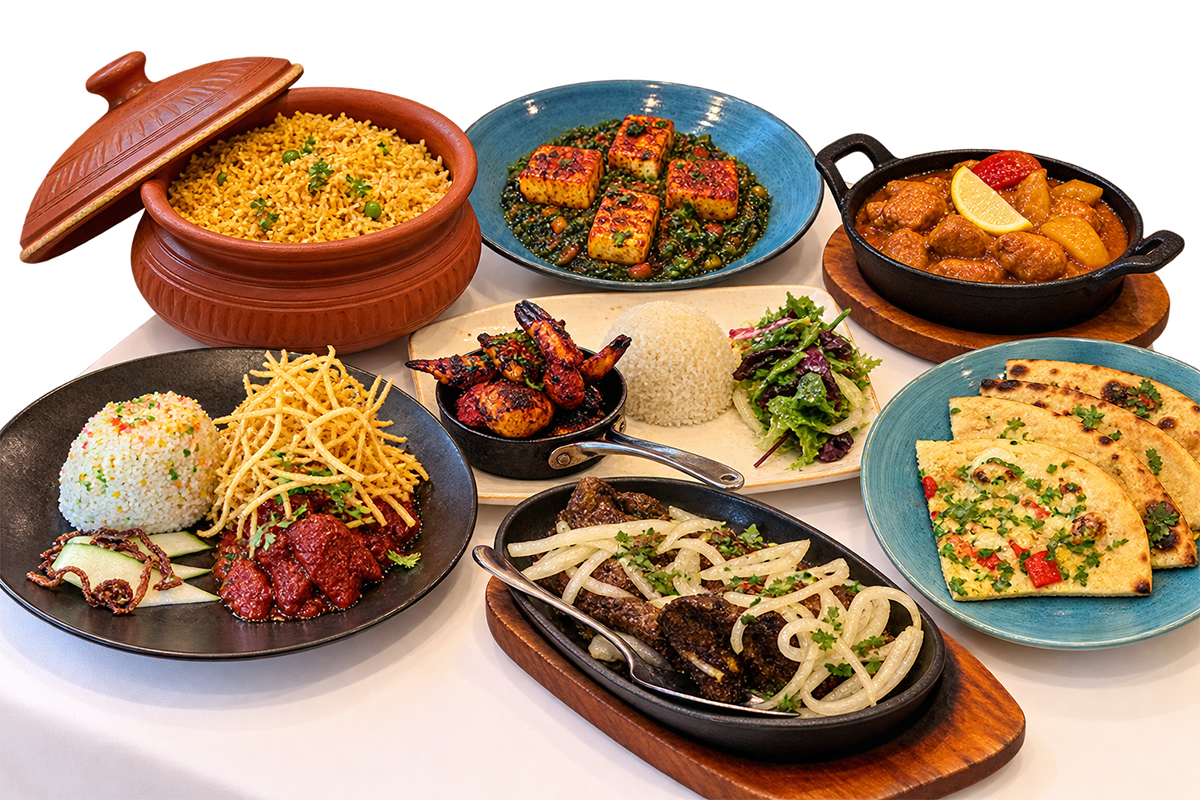
At Club Paprika, Indian Traditions Find a Stylish New Home
Bold Spices, Beautiful Presentation And A Warm Welcome Club Paprika brings vibrant Indian cuisine to Royal Leamington Spa, combining beautifully presented street food, aromatic curries, sizzling grills and elegant surroundings in a welcoming restaurant celebrating flavour and tradition. R oyal Leamington Spa has long possessed a certain elegance. Its Regency architecture, leafy avenues and independent…
-

Zhenni Jackson Featured On Entrepreneur Prime Cover And Presented With Visionary Vanguard Award
Exclusive Interview Explores Her Journey From Luxury Beauty And Wellness To Enterprise AI LONDON, 14 October 2026 — Zhenni Jackson, co-founder and CEO of enterprise AI company opAIda, is featured on the cover of the latest issue of Entrepreneur Prime magazine, accompanied by an exclusive interview exploring her entrepreneurial journey, leadership philosophy and vision for…